Generative AI Is Changing the Creative Starting Point
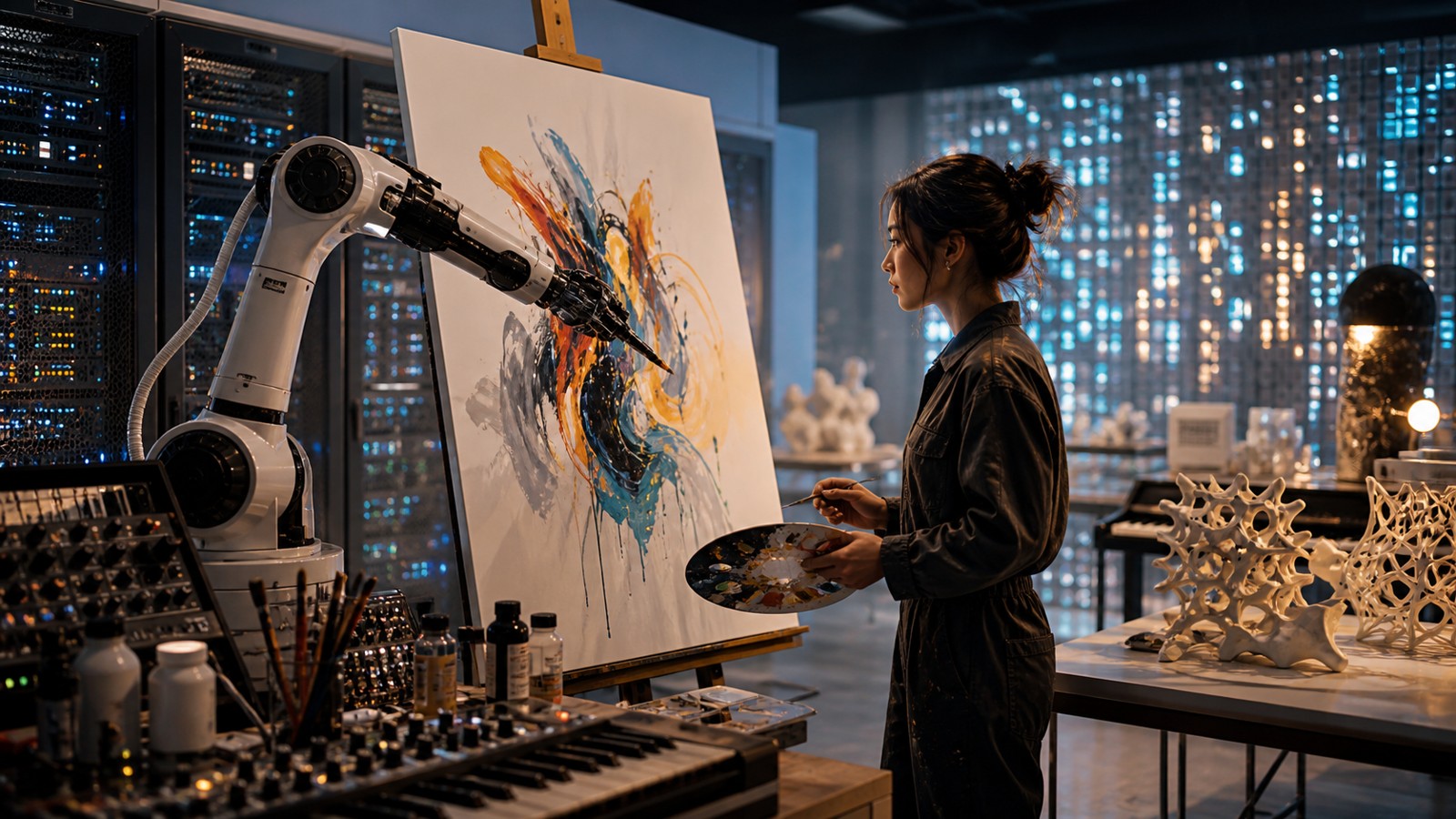
Generative AI is rewriting creativity because it changes what a blank page means. Writers can begin with ten possible outlines instead of one uncertain sentence. Musicians can explore textures before booking a studio. Designers can test directions before committing days to a single mockup. The machine does not replace taste, intent, or lived experience, but it does multiply the number of beginnings a person can examine. That shift is already changing art, music, media production, branding, education, and everyday expression.
A: It is about using AI to improve drafting, summarizing, coding, brainstorming, and answering while keeping review and context in place.
A: No. Outputs need testing, source checks, and human judgment.
A: Common risks include hallucinations, exposed instructions, weak sourcing, and misplaced trust.
A: The most important data is the data that matches the real task and user decision.
A: No. Prompts help, but data quality, tool design, and review matter too.
A: Humans should stay involved when outcomes affect people, money, safety, privacy, or trust.
A: Test outputs against real examples, track errors, and measure whether the workflow improves.
A: Yes. Fluency is not proof of accuracy.
A: Clear goals, good data, review points, monitoring, and a fallback plan.
A: Accountability stays with reviewers who verify facts and keep the output on purpose.
From Blank Page to Option Space
For most creators, the hardest stage is not always finishing; it is beginning. Generative AI changes that stage by turning a vague intention into a field of visible options. A filmmaker can ask for scene directions, a designer can test visual moods, and a songwriter can explore alternate lyrical structures before deciding where the real work begins. This does not make the early options good by default. It makes them available, which changes the psychology of starting.
That abundance is both empowering and dangerous. When ideas arrive quickly, creators can confuse motion with progress. The first lesson of AI-assisted creativity is that more options do not equal stronger work. The creator’s job shifts toward framing the problem, recognizing the promising branch, and cutting away the rest. In that sense, generative AI makes taste more visible because every selection reveals what the person values.
Why Drafting Feels Different
Traditional drafting often moves in a line: sketch, revise, polish, publish. AI-assisted drafting is more like branching. One prompt can produce several directions, each direction can split again, and the creator can return to an earlier version when the newest branch loses the thread. This workflow is natural for software but unfamiliar for many creative disciplines. It asks artists to think like editors earlier in the process.
The advantage is speed. A creative team can discover that a concept is weak before spending a week rendering it. A musician can hear that a mood is too sentimental before arranging a full track. A writer can test whether an article structure carries the argument before drafting every paragraph. Used well, AI compresses the distance between idea and critique.
The drawback is shallowness. If the creator accepts the average result, the work may feel smooth but empty. Strong drafts still require friction: a reason for the piece, a point of view, a constraint, a sense of audience, and the patience to revise beyond the machine’s first fluent answer.
Art Direction Becomes the Center
As generative tools improve, the most valuable creative role may be art direction. Anyone can request a polished image, but not everyone can define what the image should do, why it belongs in a project, what emotional register it needs, or what visual references should be avoided. Art direction turns a model from a novelty machine into a collaborator with boundaries.
This is especially clear in branding and media. A company that asks for futuristic imagery may receive something glossy and forgettable. A team with a clearer brief can specify audience, material texture, setting, camera distance, cultural tone, and practical constraints. The model still generates, but the creative intelligence sits in the human decision system around it.
Music, Voice, and Consent
Music shows both the promise and the tension of generative AI. Producers can sketch harmonies, sound palettes, and transitions faster than before. Independent creators can build demos without access to expensive studio resources. Educators can demonstrate arrangement choices in a more interactive way. These uses expand participation and experimentation.
Voice generation is more complicated because a voice carries identity. Simulating a recognizable singer or speaker without consent can feel invasive even when the result is technically impressive. The same technology that helps a small team prototype a chorus can also blur authorship, likeness, and rights. That is why responsible music workflows need permission, documentation, and clear boundaries around synthetic voices.
The future of AI music will not be settled by whether machines can make sounds. They already can. The deeper question is whether listeners feel a human relationship to the work. Performance, vulnerability, timing, and cultural memory still matter. AI can widen the palette, but it cannot decide what a song means to a community.
Creativity as Conversation
The most productive creators treat AI as a conversation partner rather than an oracle. They ask for alternatives, reject most of them, combine fragments, push against cliches, and bring outside references back into the process. The tool becomes a way to externalize thinking. It can make hidden assumptions visible because the output shows what the prompt implied.
This conversational mode is useful because creativity often improves through resistance. A bad output can clarify what the creator does not want. A surprising output can reveal a direction worth exploring. A too-obvious output can signal that the brief needs sharper constraints. In each case, the value comes from the creator’s response, not from passive acceptance.
The Risk of Infinite Polish
Generative AI is very good at producing surface polish. It can smooth prose, render dramatic lighting, imitate commercial composition, and create sounds that resemble finished production. That polish can hide weak ideas. A glossy image may lack a point. A clean paragraph may avoid the hard claim. A professional-sounding track may carry no emotional risk.
Creators need defenses against infinite polish. One defense is process: define the intended audience and purpose before generating. Another is critique: ask what the work says that a generic version would not. A third is material practice: keep drawing, writing, filming, playing, and editing outside the tool. The more a creator understands the medium, the better they can judge the machine’s contribution.
Teams also need permission to stop. Because AI can keep producing variations, projects can drift forever. Deadlines, briefs, and taste become anchors. The final decision should not be the last output generated; it should be the strongest answer to the creative problem.
Rights, Credit, and the New Creative Contract
Generative AI also forces creators to be more explicit about rights and credit. In older workflows, a team might discuss stock licensing, model releases, samples, or commissioned illustration as separate production details. AI blends those concerns because one tool can imitate styles, generate faces, suggest melodies, and transform reference material in the same session. The convenience is real, but so is the responsibility to know what can be used, what should be avoided, and what needs permission.
This is not only a legal issue. It is a trust issue. Audiences care when a work appears to borrow from a living artist without consent. Musicians care when synthetic voices mimic identity. Clients care when brand assets are created through tools whose licensing terms they do not understand. Creative teams that document their process will be in a stronger position than teams that treat AI as an invisible shortcut.
A healthy contract for AI-assisted creativity should say where the tool was used, who approved the final result, what sources or references shaped the work, and what boundaries were respected. That does not drain the mystery from art. It protects the people and relationships that make creative culture possible.
Learning Creativity With AI in the Room
AI changes creative education because it gives beginners instant examples. A student can compare five article openings, ten lighting concepts, or several chord progressions in minutes. That can accelerate learning when the student is asked to critique the differences. It can weaken learning when the student skips the struggle that builds judgment. The tool is most useful when it becomes a mirror for decisions rather than a replacement for decisions.
Teachers and mentors can use generative systems to make process visible. Instead of presenting one finished work, they can show why certain versions fail, why a revision improves the piece, and how constraints change the outcome. Students can learn that creativity is not a lightning strike; it is a series of choices. AI can supply material for those choices, but it cannot experience the consequences of making them.
What Organizations Should Do First
Organizations should begin with low-risk creative workflows. Internal brainstorming, mood exploration, draft outlines, and prototype visuals are safer places to learn than final public campaigns. Teams should create rules for disclosure, review, data privacy, and brand consistency before AI outputs move into production. Those rules do not need to be heavy, but they need to be clear enough that people know when to pause.
The best early pilots measure usefulness instead of spectacle. Did the tool help the team explore more ideas? Did it reduce repetitive labor? Did it improve the final work, or only make it faster? Did reviewers catch new problems? A pilot that answers those questions is more valuable than a flashy demo. It teaches the organization how creative AI fits its actual culture.
Why Professionals Still Matter
Professional creators bring memory, taste, and accountability that a model does not have. A designer knows why a layout might feel wrong for a specific audience. A producer hears when a track is technically full but emotionally flat. A writer senses when a sentence is smooth but evasive. These judgments come from experience with people, not only from exposure to patterns.
That expertise becomes more valuable when generative tools are everywhere. If every team can create a polished draft, the competitive difference moves to direction and refinement. Professionals will spend less time proving that they can produce material and more time proving that they can shape material into something true, useful, and memorable. AI raises the volume of output; human craft determines what deserves attention.
How Creative Work Will Change
Creative industries are likely to reorganize around faster exploration and more explicit judgment. Entry-level tasks may change as rough production becomes easier. At the same time, new roles will emerge around AI direction, rights review, dataset strategy, model evaluation, and hybrid production. The people who thrive will understand both the tool and the craft it touches.
This does not mean every artist must use AI in the same way. Some will reject it for philosophical or aesthetic reasons. Some will use it only for research. Some will build entire practices around human-machine collaboration. The important thing is that choices remain legible. Audiences, clients, and collaborators deserve to understand what kind of creative promise is being made.
What Remains Human
The human center of creativity is not simply the manual act of making. It is the reason for making, the judgment applied along the way, and the responsibility for the result. Generative AI can help produce material, but it cannot know why a family story matters, why a protest song lands at the right moment, or why a visual detail changes the emotional truth of a scene.
That is why the future of creative AI should be judged by whether it expands human expression, not by whether it replaces human effort. The best uses give creators more room to explore, more ways to learn, and more power to shape ideas that would otherwise stay private. The weakest uses flood the world with competent sameness. The difference is not only in the model. It is in the creative choices around it.
Generative AI is rewriting art, music, and creativity by changing the workflow beneath the finished piece. It moves the blank page, accelerates variation, and raises new questions about authorship and trust. But the final creative act still belongs to the person or team willing to choose, revise, and mean something.