NASA Uses AI Where Distance and Data Overwhelm Manual Control
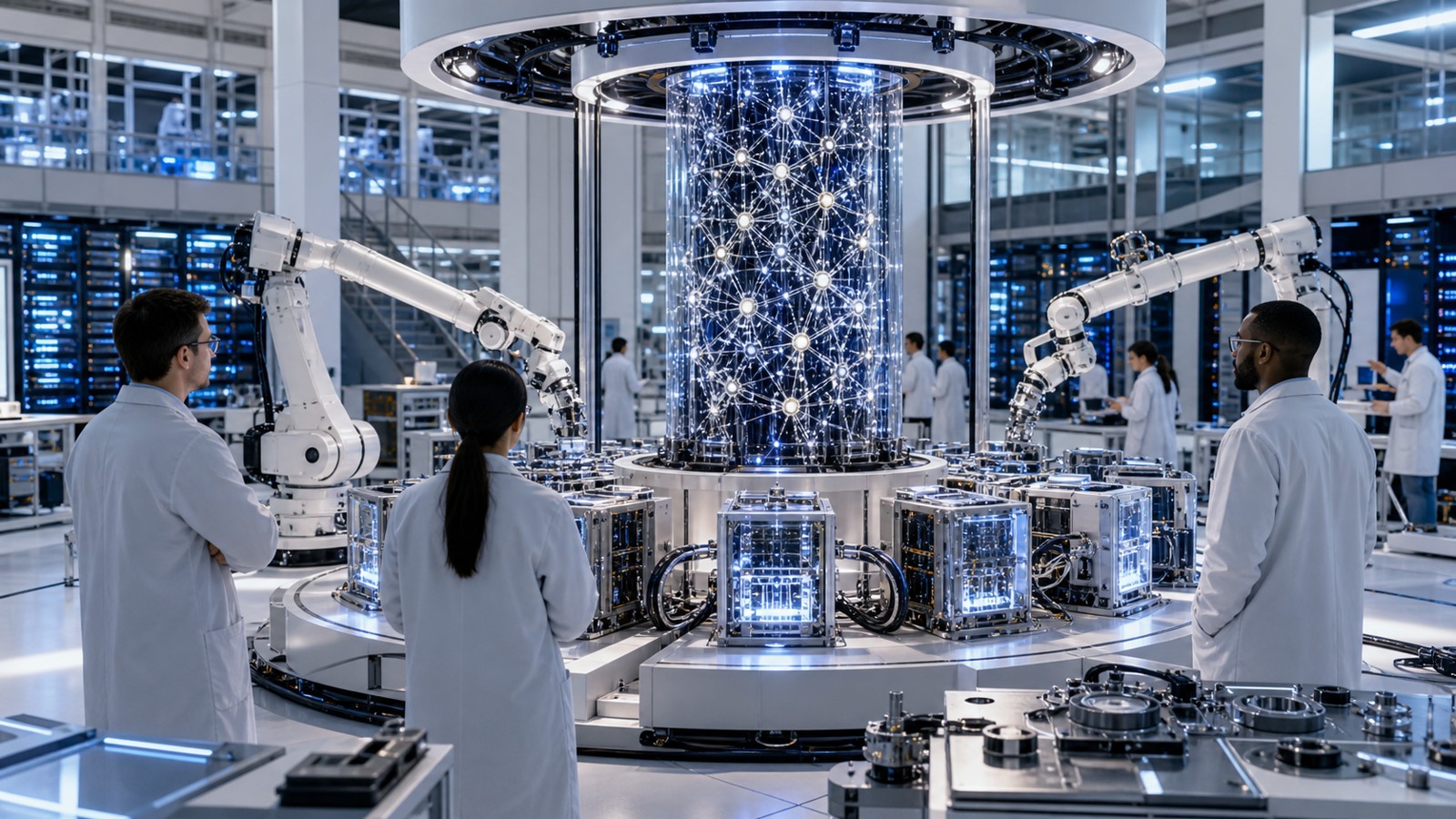
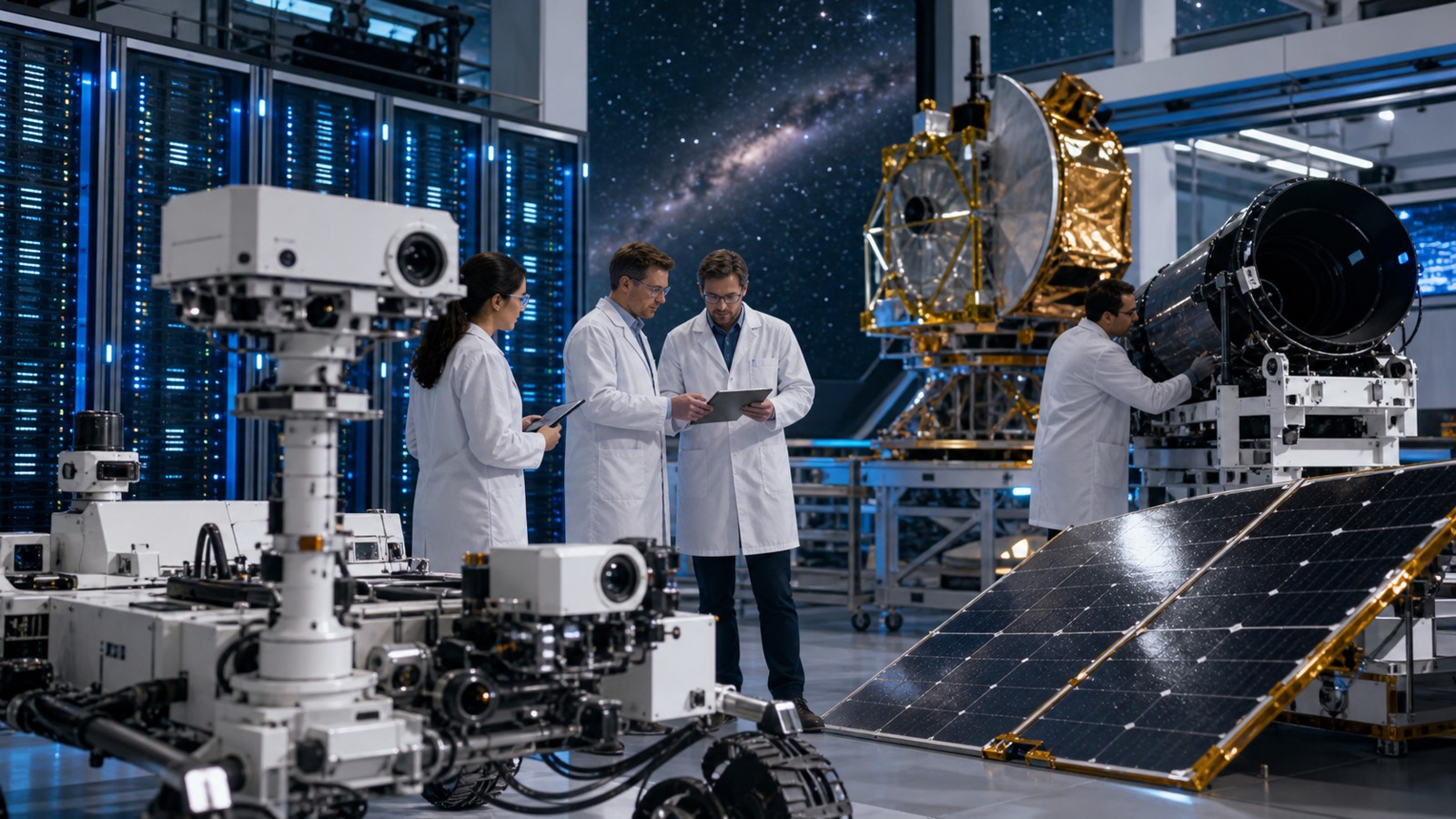
NASA uses artificial intelligence because space exploration creates problems that are too distant, too fast, too data-heavy, or too constrained for manual control alone. Rovers need to move across uncertain terrain when Earth is minutes away by radio. Satellites collect more imagery than humans can inspect by hand. Telescopes produce vast archives of signals where rare discoveries may be hidden. Spacecraft need monitoring for subtle anomalies long before a failure becomes obvious. AI helps NASA and its partners prioritize data, plan actions, recognize patterns, and extend human curiosity into places where direct human presence is impossible.
A: Yes. NASA uses AI and machine learning for autonomy, science analysis, planning, and monitoring.
A: They can handle some navigation decisions, but mission teams still set goals and constraints.
A: It can search large telescope datasets for patterns that may indicate candidate planets.
A: Satellites collect huge data streams that AI can classify, filter, and prioritize.
A: No. AI helps search and organize evidence, while scientists validate and interpret it.
A: Distance, power limits, radiation, bandwidth, and limited repair options make reliability essential.
A: No. Autonomy is bounded by mission rules, tested software, fault protection, and human planning.
A: It can detect environmental change, disasters, clouds, land use, and climate patterns.
A: Distance, delay, scarce data, and irreversible hardware choices make verification more important than speed.
A: More missions will use onboard intelligence while humans keep science goals and oversight.
Why NASA Needs Intelligent Assistance
NASA's work combines distance with data. A rover, probe, telescope, or satellite can collect information in places humans cannot directly inspect. The problem is that raw data is not discovery by itself. Someone or something has to sort, prioritize, interpret, and act.
AI helps because space missions often cannot wait for perfect human control. Mars is far enough away that commands and responses take time. Deep-space missions may be delayed by hours. Satellites may produce imagery faster than analysts can review it. AI can help make local choices within boundaries.
The point is not to remove scientists or mission controllers. It is to give them better leverage. AI can flag what deserves attention, handle routine classification, and preserve time for human interpretation. Space exploration becomes more effective when machine assistance extends human focus.
This is practical AI rather than science fiction. The strongest uses are often narrow: detect a feature, avoid a hazard, sort images, compare schedules, or flag an anomaly. Those narrow tasks can still have enormous value when every mission day is precious. Space missions reward systems that perform specific jobs reliably for long periods, because one saved observation or one avoided hazard can change the scientific return of an entire mission.
Rover Autonomy on Other Worlds
Rovers are among the clearest examples of AI-assisted exploration. A rover must move across terrain that is uncertain, uneven, and expensive to traverse. Every drive uses time and energy, and every mistake can threaten a mission. Autonomy helps the rover make safer local choices.
Computer vision can help identify rocks, slopes, soft soil, shadows, and other features. Route planning can compare paths and select a safer option. If a rover encounters unexpected terrain, it may adjust rather than waiting for a complete new plan from Earth.
AI can also help with science targeting. A rover may notice unusual textures, layers, or mineral clues and prioritize extra observations. Scientists still interpret the geology, but onboard intelligence helps decide which data is worth sending and which targets deserve limited instrument time.
The value of rover autonomy is cumulative. Saving a little time each day can add up across a long mission. Avoiding one dangerous route can preserve years of scientific work. AI helps exploration continue when delay would slow discovery.
Rover systems must remain cautious. The goal is not reckless independence. Mission teams define allowed actions, risk limits, and priorities. The rover's autonomy works inside those constraints.
AI in Earth Observation
NASA also studies Earth from space, and Earth observation creates enormous data streams. Satellites monitor weather, forests, oceans, ice, cities, agriculture, pollution, fires, floods, and storms. AI can help turn those observations into usable insight.
Machine learning models can detect change across images. They may identify burned areas after wildfires, flood boundaries after storms, vegetation stress during drought, or shifts in ice and coastlines. Faster analysis can support emergency response, climate research, and long-term planning.
These tools are powerful because they combine scale with repetition. A human analyst may inspect selected images, while AI can compare many regions over time. The model can surface areas that deserve human review.
Validation remains essential. Clouds, shadows, sensor noise, seasonal changes, and local conditions can confuse models. Earth science AI needs ground truth, uncertainty estimates, and scientific review. The output should guide investigation rather than replace it. This matters because satellite analysis can influence disaster response, climate planning, agriculture, and public policy. A fast answer is valuable only when people understand how confident it is.
Searching the Sky With Machine Learning
Astronomy produces vast datasets. Telescopes survey the sky repeatedly, recording light curves, spectra, images, and time-based events. Somewhere in those archives may be exoplanet candidates, unusual stars, distant galaxies, or rare transient events. AI can help search the haystack.
Machine learning can classify objects, detect anomalies, and reduce candidate lists. In exoplanet research, models can help identify patterns in starlight that may suggest a planet passing in front of a star. They do not prove a discovery alone, but they help scientists decide where to look more carefully.
The same pattern applies across astronomy. AI can help sort galaxies, identify asteroid tracks, search for gravitational-wave counterparts, or classify stellar behavior. It expands the scale of search so scientists can ask larger questions.
Scientific caution is the safeguard. A candidate signal may be an instrument artifact, noise, or a known phenomenon. AI helps generate leads, but discovery still requires evidence, replication, and explanation.
This partnership is one of the best examples of human-AI collaboration in science. The machine widens the search; the scientist decides what the signal means.
Planning Missions Under Tight Constraints
Space missions are constraint puzzles. Instruments need power. Spacecraft need thermal safety. Communication windows are limited. Orbits determine timing. Rovers have terrain and energy limits. Scientists have competing priorities. AI-assisted planning can compare many options under those constraints.
A planning system may help schedule observations, choose sequences, avoid conflicts, or evaluate tradeoffs. This does not sound glamorous, but it can improve the scientific return of a mission. A better schedule may mean more data, less risk, and fewer missed opportunities.
Planning AI is useful because humans cannot manually explore every combination. The system can generate options for review, show conflicts, and help teams choose a plan that balances risk and reward.
The human role remains decisive. Mission teams know which goals matter most and which risks are acceptable. AI helps them reason through complexity without replacing their judgment. This is especially important when scientific priorities conflict. A mission may need to choose between a safer route and a more interesting target, or between preserving power and capturing a rare observation. AI can clarify the tradeoff, but people decide what the mission is ultimately trying to learn.
Keeping Spacecraft Healthy
Spacecraft health monitoring is another important use. A mission may involve thousands of telemetry signals from instruments, power systems, thermal controls, propulsion, communication, and onboard computers. Small anomalies can matter if they reveal early signs of failure.
AI can learn normal patterns and flag unusual behavior. It may notice combinations of signals that are difficult for humans to track continuously. Early warning gives engineers more time to investigate before a small problem becomes a mission-threatening event.
This kind of AI must be conservative and explainable enough for operations. A false alarm can waste attention, but a missed warning can be costly. Engineers need to understand what changed, how unusual it is, and which subsystem may be involved.
Spacecraft cannot be repaired easily, so monitoring is part of mission survival. AI becomes valuable when it helps people notice the weak signal before the obvious failure. The same idea applies during long missions where hardware ages in unfamiliar conditions. A small temperature shift, power fluctuation, or communication irregularity may not mean much alone, but the pattern across time can tell engineers where to look.
Good anomaly detection also protects attention. Mission teams cannot treat every small variation as a crisis, yet they cannot ignore subtle warning signs. AI can help rank what deserves review, explain which signals changed together, and give engineers a clearer starting point for investigation.
Why NASA Still Needs Human Scientists
AI can classify, prioritize, detect, and suggest, but science still needs human questions. NASA missions are not only data collection exercises. They are attempts to understand planets, stars, life, climate, origins, and the physical laws shaping the universe.
Human scientists decide what counts as evidence. They compare model output with theory, instruments, and alternative explanations. They ask whether a pattern is meaningful or merely convenient. They design the next observation that can test the claim.
Mission control also requires human judgment. Teams decide when to risk a drive, when to preserve hardware, when to change a plan, and when an unexpected signal deserves attention. AI can improve the options on the table, but people still own the purpose of the mission.
The Future of NASA and AI
Future missions will likely use more onboard intelligence. Rovers may travel farther between commands. Satellites may process more data at the edge. Probes may react to rare events before Earth can respond. Human crews may use AI assistants for maintenance, planning, and emergency support.
The challenge will be balancing autonomy with trust. Space missions need systems that are capable, bounded, tested, and transparent. A flashy AI that cannot be trusted under mission conditions is less valuable than a narrow system that performs reliably for years.
NASA's use of AI shows the practical future of exploration. Intelligent machines will not replace human curiosity. They will carry it farther, search more widely, and help scientists use limited mission time with more care. The most interesting future may be one where spacecraft, rovers, telescopes, and human teams form a distributed scientific workflow, each doing the kind of work it is best suited to do. That workflow will matter as missions become more ambitious. Lunar operations, Mars sample return efforts, outer-planet probes, telescope surveys, and Earth-observation networks all produce decisions under constraints. AI can help NASA compare options, preserve opportunities, and turn overwhelming data into questions humans can investigate. The best uses will likely remain mission-specific rather than generic. A rover navigation system, telescope classifier, anomaly detector, and planning assistant each need different evidence, safeguards, and failure modes. NASA's lesson for the wider AI world is that autonomy becomes trustworthy when it is narrowed, tested, measured, and paired with expert human review.
The final lesson is simple: space rewards intelligence at the edge. When humans cannot be present, AI can help our instruments notice, decide, and preserve the evidence that leads to discovery.
That edge intelligence will become more important as exploration spreads across more destinations and instruments. The farther a mission travels, the more it needs local judgment inside human-defined limits. AI gives NASA a way to place a little more decision-making power near the data, while keeping the purpose of exploration grounded in human science.
This is why NASA's AI story is not only about automation. It is about extending the scientific method into environments where time, distance, and data volume create barriers. The AI helps gather and filter possibilities, while human teams decide what those possibilities mean. That pattern will likely shape the next generation of exploration: more local intelligence, more efficient data triage, and more human attention reserved for interpretation. AI becomes most valuable when it helps scientists notice what they would otherwise miss. In that sense, NASA's use of AI is a preview of responsible autonomy: narrow enough to trust, powerful enough to matter, and always connected to a larger human question about discovery, safety, evidence, exploration, and the careful use of limited mission time across many missions and instruments in harsh environments far from Earth and its repair crews during long missions.