Autonomous Exploration Helps Spacecraft Act When Earth Is Too Far Away
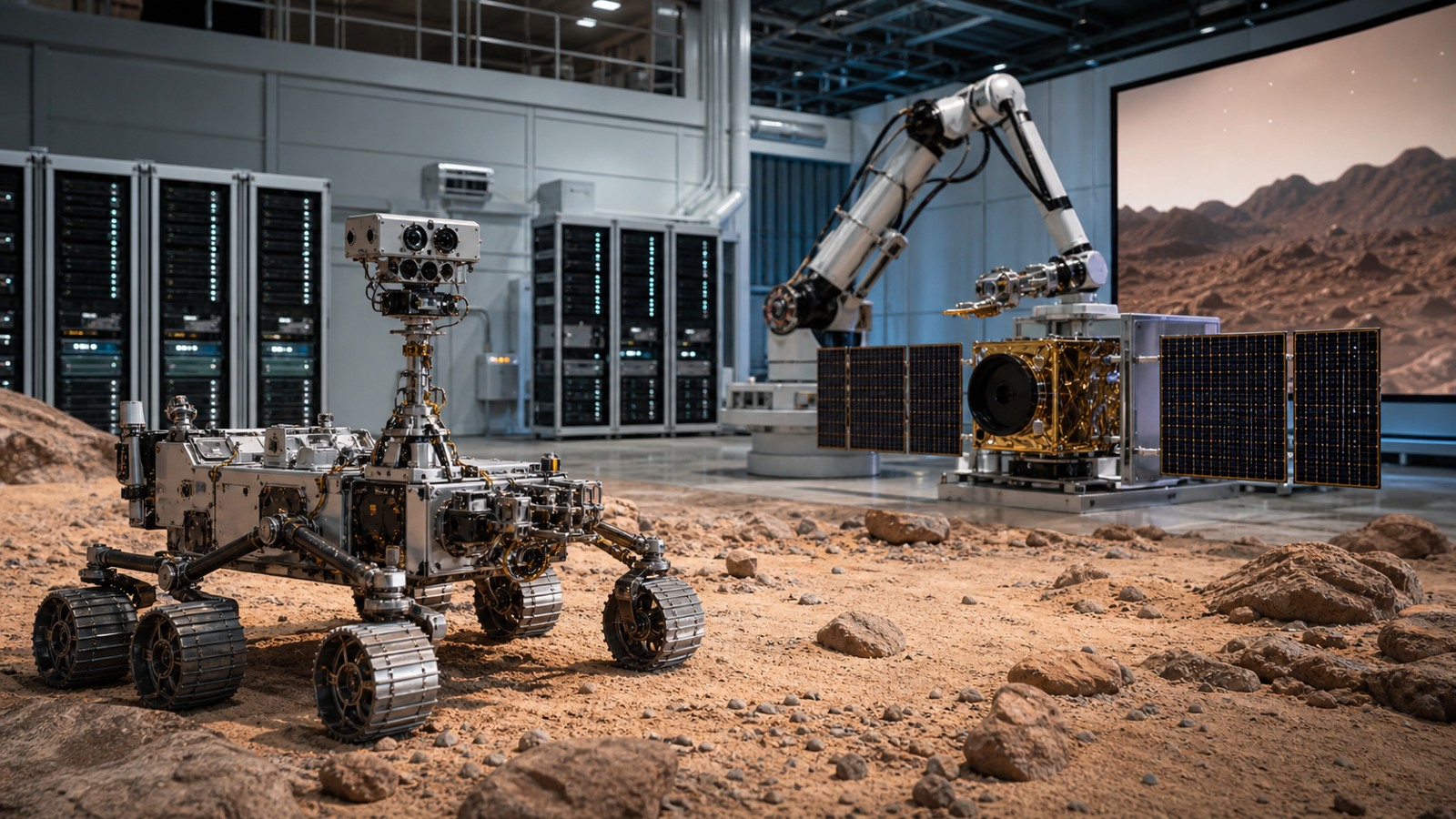
AI-powered space missions are the future of autonomous exploration because distance makes constant human control impossible. A spacecraft near Earth can receive instructions quickly, but missions to Mars, outer planets, asteroids, icy moons, and deep space face communication delays, limited bandwidth, harsh environments, and unexpected conditions. AI helps spacecraft navigate, prioritize science targets, detect faults, manage resources, coordinate robots, and respond when waiting for Earth would waste time or risk the mission. The goal is not removing humans from exploration. It is giving human missions smarter machines that can act responsibly between commands, especially when rare discoveries or sudden hazards appear far from direct supervision during long missions where every watt, minute, and transmission window matters for science and survival far from Earth.
A: It is about using AI to improve forecasting, ranking, scoring, and decision support while keeping review and context in place.
A: No. Outputs need testing, source checks, and human judgment.
A: Common risks include bad assumptions, stale data, and overconfident forecasts.
A: The most important data is the data that matches the real task and user decision.
A: No. Prompts help, but data quality, tool design, and review matter too.
A: Humans should stay involved when outcomes affect people, money, safety, privacy, or trust.
A: Test outputs against real examples, track errors, and measure whether the workflow improves.
A: Yes. Fluency is not proof of accuracy.
A: Clear goals, good data, review points, monitoring, and a fallback plan.
A: Accountability stays with analysts who test the pattern before acting on it.
Why Space Missions Need More Autonomy
Space exploration is a delay problem as much as a distance problem. Commands sent to Mars can take minutes to arrive, and responses take minutes to return. Farther missions face even longer delays. That means a spacecraft cannot always wait for humans when a hazard appears, a science opportunity passes, or a fault begins.
Bandwidth is another constraint. Spacecraft often collect more data than they can send home quickly. AI can help identify the most valuable images, measurements, or anomalies before transmission. That lets mission teams spend limited bandwidth on the data most likely to matter.
Autonomy also protects time. A rover that waits overnight for every decision moves slowly. A spacecraft that can plan a route, avoid hazards, and choose follow-up observations can accomplish more within the same mission life. In space, time is precious because power, hardware, weather, and orbital windows are all limited.
The point is not to make spacecraft independent in a human sense. Mission autonomy is bounded. Engineers define what the system may do, how it should prioritize safety, and when it must stop and ask for help. The intelligence is practical, not rebellious.
What AI Does Onboard
Onboard AI can support perception, planning, fault management, and data selection. A rover may analyze images to identify safe terrain or interesting rocks. An orbiter may compare surface changes across passes. A telescope may classify signals and choose which events deserve immediate attention. These tasks happen closer to the source than traditional ground analysis.
Fault detection is especially important. Spacecraft operate in radiation, vacuum, extreme temperatures, and mechanical stress. If a sensor behaves strangely or a subsystem draws unusual power, onboard software may need to protect the vehicle before ground teams can respond. AI can help recognize patterns that suggest trouble.
Planning is another use. A mission day may involve charging, driving, imaging, drilling, communicating, warming instruments, and preserving battery. AI can help schedule those activities when conditions change. It can also help balance scientific ambition with survival.
Rovers, Landers, Orbiters, and Flying Robots
Planetary rovers are natural candidates for autonomy because they move through unknown terrain. They need to avoid hazards, choose paths, manage energy, and decide which observations are worth the effort. AI-assisted navigation and science targeting can make each drive more productive.
Landers can use autonomy during descent, where decisions must happen quickly. Terrain relative navigation, hazard detection, and precision landing systems help spacecraft choose safer landing zones. Once on the surface, landers can monitor weather, seismic activity, instruments, and nearby targets.
Orbiters benefit from AI because they repeatedly observe large areas. They can detect changes, identify unusual features, compress data, and coordinate with surface missions. An orbiter that spots a dust storm, fresh impact, plume, or thermal anomaly can help redirect scientific attention.
Flying robots add another dimension. Mars aircraft or future drones on other worlds can scout routes, inspect terrain, and reach places rovers cannot. Flight requires fast control and local decision-making, especially when communication delays make remote piloting impossible.
Robotic arms and sampling systems also need intelligence. Soil may slip, rocks may fracture, and drills may encounter unexpected resistance. AI can help adjust motions, interpret sensor feedback, and protect delicate instruments.
Each platform brings a different tolerance for risk. A rover may stop and wait when confused; a landing system has seconds; an orbiter may revisit a site later; a flying vehicle must stay stable in real time. Mission AI has to fit the vehicle, not only the scientific dream.
Autonomous Science Changes Mission Strategy
Traditional missions often collect data first and analyze later on Earth. Autonomous science changes that order. The spacecraft can perform initial analysis onboard, decide what looks unusual, and prioritize follow-up measurements. This is valuable when events are brief or data volume is high.
Imagine a rover crossing a field of ordinary rocks and spotting one with unusual texture or chemistry. Instead of waiting for the next planning cycle, the rover could take extra images or measurements within approved limits. That does not replace scientists. It gives scientists a better chance of receiving the important evidence.
Autonomous science is also useful for observing dynamic systems. Storms, plumes, volcanic activity, auroras, impacts, and surface changes may not wait for Earth-based commands. A mission that can react locally can catch events that would otherwise be missed.
The challenge is trust. Scientists need to know why the system chose one target over another. Engineers need to know that extra observations will not endanger power, memory, or schedule. Good autonomy includes explanation and constraints.
Human Exploration Will Use AI Too
AI-powered autonomy is not only for robotic missions. Future astronauts on the Moon, Mars, or deep-space habitats may use AI assistants to monitor systems, retrieve procedures, summarize warnings, support repairs, and manage scientific experiments. Crew time is limited, and communication delays can make Earth support less immediate.
A habitat assistant could watch life support trends, flag maintenance risks, and help prioritize tasks. A rover assistant could plan routes for crewed excursions. A medical support system could help astronauts follow procedures when specialists are far away. These uses require reliability because the environment is unforgiving.
Human spaceflight also raises interface questions. An AI assistant must be helpful without becoming distracting or overconfident. Astronauts need clear explanations, override options, and confidence levels. In emergencies, the system must support human action rather than flood the crew with uncertain advice.
Testing Space AI Is Difficult
Space AI must be tested more rigorously than ordinary consumer software because repair is hard or impossible. A model that behaves well in a lab may face lighting, dust, terrain, radiation, sensor noise, and hardware aging that were not fully captured in training. Simulation helps, but simulation is never the whole planet.
Verification includes bounding the system’s choices. Instead of allowing open-ended behavior, engineers define action spaces, safety rules, fallback modes, and thresholds for human review. The spacecraft may be allowed to choose between approved observations but not rewrite the mission plan freely.
Testing also has to include failure. What happens if a camera is dirty, a wheel slips, a battery underperforms, or a model is uncertain? A good autonomous system should degrade gracefully. It should know when to stop, protect itself, and wait for instructions.
This makes space autonomy slower to adopt than some Earth applications. The caution is appropriate. A mistake in space can cost years of planning and hundreds of millions of dollars. The reward for getting it right is a mission that can do more science with the same hardware.
Testing also needs mission-specific imagination. Engineers must ask what the AI should do when two good science targets compete, when dust reduces solar power, when a sensor disagrees with another sensor, or when a route looks safe but consumes too much time. These tradeoffs are where autonomy becomes real.
The Future of Deep-Space Autonomy
The farther missions travel, the more autonomy they will need. Outer planet probes, icy moon landers, asteroid missions, and eventual interstellar concepts cannot rely on frequent human intervention. They will need to manage uncertainty, prioritize observations, conserve resources, and survive unexpected conditions for long periods.
Swarm missions could push autonomy further. Instead of one spacecraft, many small probes might share observations and coordinate coverage. AI would help distribute tasks, avoid duplication, and keep the group useful even if some units fail. This could change how scientists study planetary atmospheres, magnetic fields, asteroid belts, or Earth systems.
Autonomous construction and maintenance may also matter on the Moon and Mars. Habitats, power systems, landing pads, communications relays, and resource processing equipment will need inspection and repair. Robots that can do routine work before crews arrive could reduce risk and cost.
Earth science will benefit too. Satellite constellations can use AI to detect fires, floods, storms, illegal fishing, crop stress, and infrastructure changes more quickly. Space autonomy is not only about distant worlds; it also helps humanity understand this one.
Future missions may also use autonomy to preserve surprise. If a spacecraft encounters something outside the expected catalog, the system should not discard it as noise too quickly. The best AI mission tools will be conservative about safety but curious about unusual evidence.
Long-duration exploration will demand even more. A probe traveling for decades cannot depend on the same assumptions, software priorities, or hardware health it had at launch. Autonomy may need to support graceful aging, self-diagnosis, and careful use of limited resources over timescales that challenge ordinary engineering habits.
That does not mean every future spacecraft will improvise freely. The likely path is layered autonomy: routine decisions handled onboard, unusual decisions escalated when possible, and dangerous actions constrained by mission rules. The art is deciding which layer owns which choice.
What Autonomous Exploration Means for Humanity
AI-powered space missions extend human curiosity. They let machines travel where people cannot yet go, make local decisions where signals are delayed, and send back better evidence for scientists to interpret. The human role remains central: choosing questions, designing missions, setting limits, and making meaning from discoveries.
The future will likely combine human judgment with machine patience. Robots can wait in cold darkness, cross dangerous terrain, monitor instruments for years, and react faster than a ground team when local conditions change. Humans bring purpose, interpretation, ethics, and imagination.
Autonomous exploration also changes ambition. Missions can become more adaptive. Instead of following a rigid script, they can respond to what they find. That matters because the most exciting discoveries are often the ones planners did not fully expect.
AI will not make space easy. It will make spacecraft better partners in a hard environment. As missions travel farther and operate longer, autonomy will become less like a bonus feature and more like the nervous system of exploration.
That future still begins with human questions. Where did water persist, how do planets change, what makes worlds habitable, and what can Earth learn from the rest of the solar system? AI helps missions pursue those questions with more patience and responsiveness than remote control alone.
That future still begins with human questions. Where did water persist, how do planets change, what makes worlds habitable, and what can Earth learn from the rest of the solar system? AI helps missions pursue those questions with more patience and responsiveness than remote control alone.