Autonomous AI Is Leaving The Screen
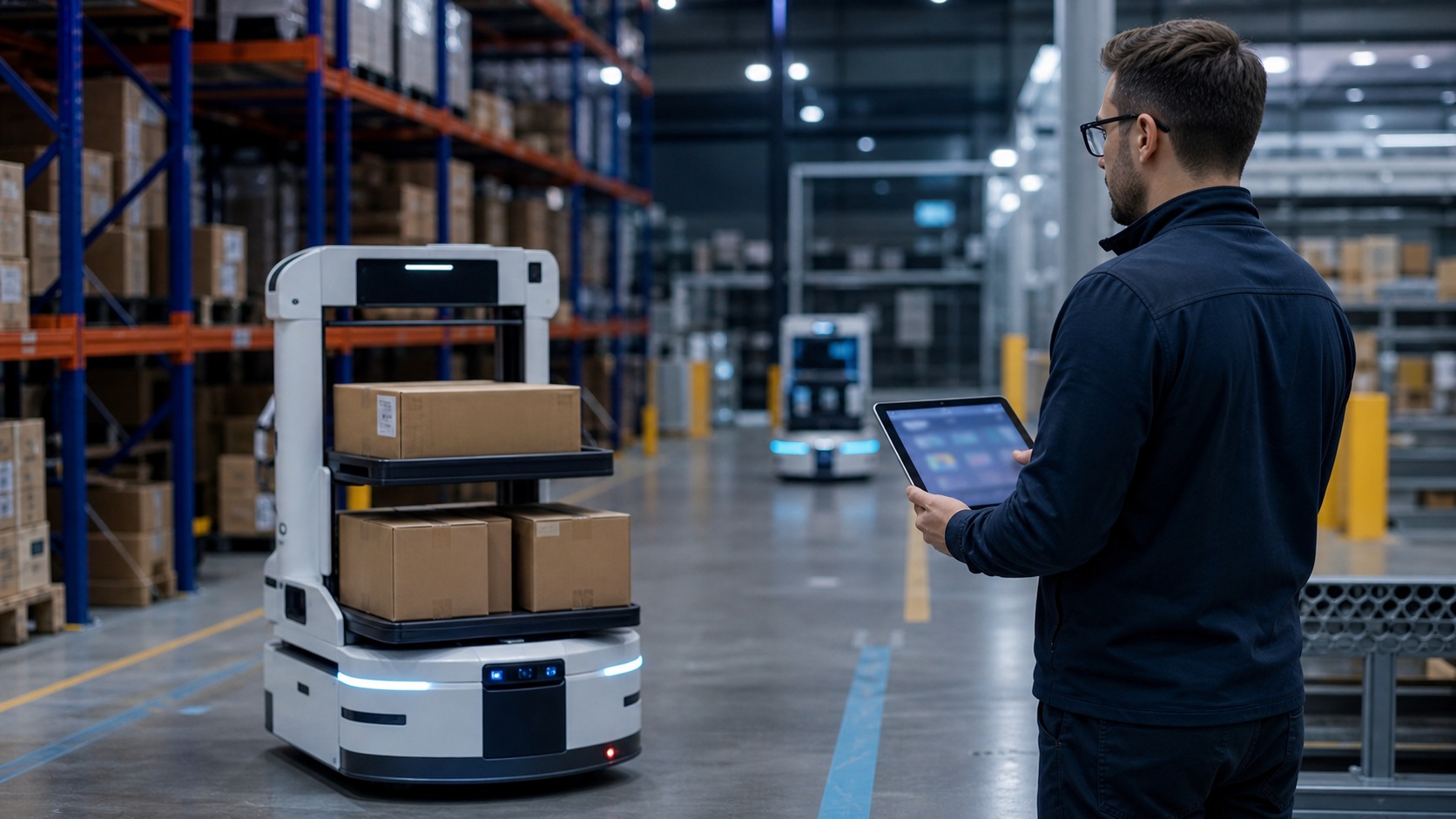
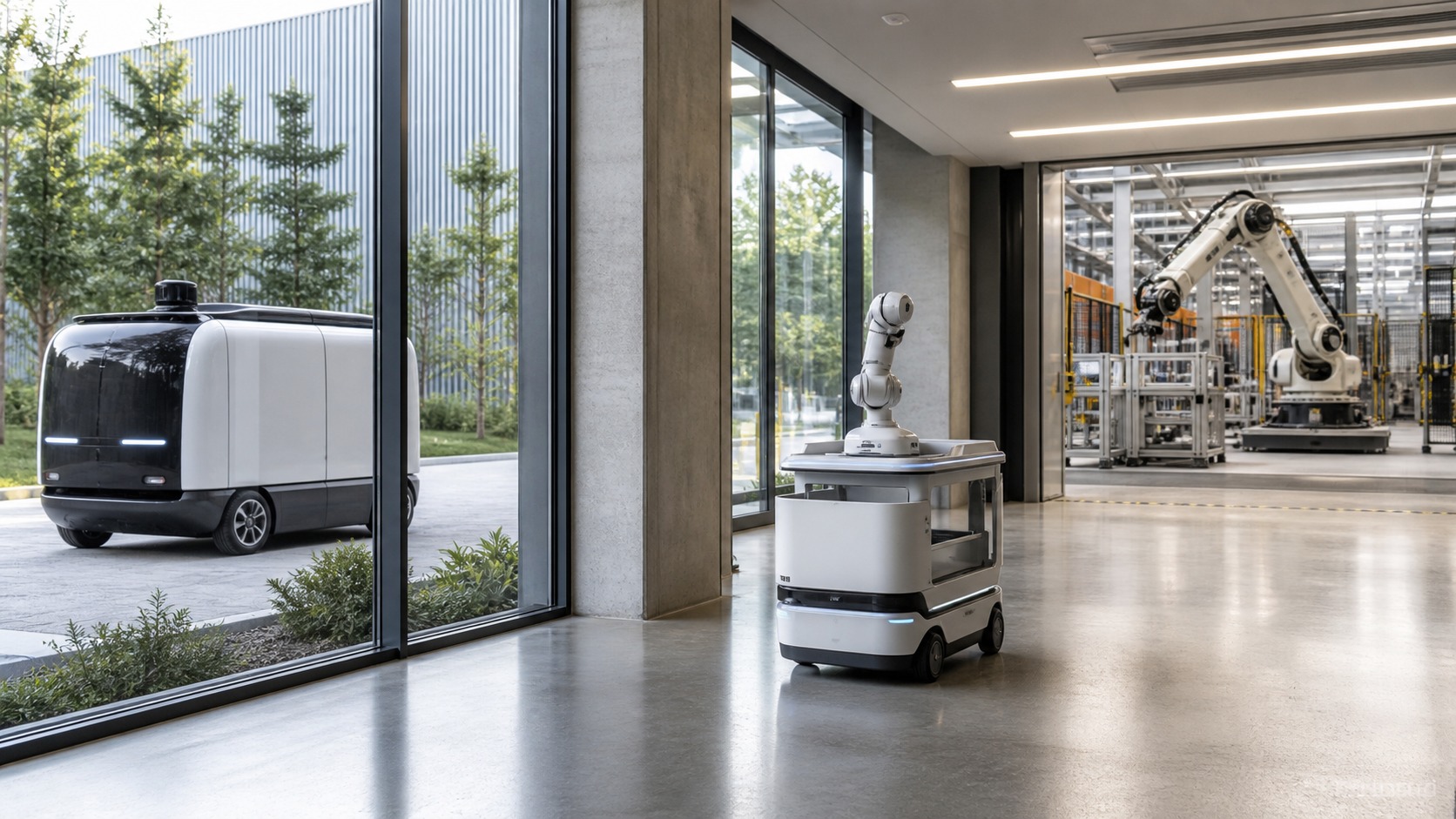
Autonomous AI becomes easier to understand when you stop picturing it as a chatbot and start picturing it as a decision system with wheels, sensors, schedules, robotic arms, and accountability. In transportation, it chooses routes and reacts to traffic. In healthcare, it moves supplies, flags risk, and assists clinical logistics. In manufacturing, it turns machines into adaptive production partners. The common thread is not that AI suddenly acts alone; it is that software now reads the physical world, chooses a next step, and hands that decision to a machine or human workflow that can actually change what happens next.
A: It is about using AI to improve planning steps, using tools, routing work, and monitoring outcomes while keeping review and context in place.
A: No. Outputs need testing, source checks, and human judgment.
A: Common risks include runaway actions, unclear authority, brittle workflows, and poor oversight.
A: The most important data is the data that matches the real task and user decision.
A: No. Prompts help, but data quality, tool design, and review matter too.
A: Humans should stay involved when outcomes affect people, money, safety, privacy, or trust.
A: Test outputs against real examples, track errors, and measure whether the workflow improves.
A: Yes. Fluency is not proof of accuracy.
A: Clear goals, good data, review points, monitoring, and a fallback plan.
A: Accountability stays with owners who set limits, approvals, and review points.
Why Physical Context Changes The Stakes
Autonomous AI is different from ordinary software because its decisions enter spaces where people, equipment, goods, and time-sensitive processes are already moving. A recommendation engine can be wrong and still leave the world untouched; an autonomous vehicle, delivery robot, or machine controller has to respect momentum, distance, temperature, sterile handling, and human expectations. That physical context turns accuracy into only one part of the problem. Reliability, recoverability, and graceful failure become just as important.
The best way to evaluate autonomy is to ask what the system is allowed to decide on its own. A routing assistant that suggests a different truck schedule is useful, but a vehicle that changes lanes or a robot that crosses a hospital hallway needs stricter boundaries. Transportation, healthcare, and manufacturing all use AI to sense and act, yet each sector defines acceptable risk differently. That is why autonomous AI never arrives as a single universal product. It arrives as a carefully bounded operating model.
Transportation Is Becoming A Coordinated Decision Network
In transportation, autonomy is not limited to passenger cars. Ports, airports, freight yards, transit depots, mining sites, and delivery networks are already strong candidates because their routes are partly controlled and their economic incentives are clear. AI can help vehicles anticipate congestion, detect hazards, optimize energy use, and coordinate fleets so assets are not waiting in the wrong place. Even partial autonomy can matter when it reduces idle time, improves safety checks, or gives dispatchers better visibility.
Public roads remain harder because they are packed with ambiguous human behavior. A vehicle has to interpret hand gestures, temporary construction, emergency vehicles, cyclists, weather, glare, and local driving habits while making decisions in fractions of a second. That does not mean autonomy is stalled; it means the most realistic near-term progress may come from narrower domains such as fixed-route shuttles, autonomous trucking corridors, yard operations, and driver-assist systems that steadily take on more responsibility.
The larger transformation is orchestration. When vehicles, traffic signals, depots, charging stations, and logistics platforms share useful signals, transportation becomes less about one smart machine and more about a responsive network. AI can smooth demand, pre-position vehicles, reduce unnecessary trips, and help operators recover faster from disruptions. The impact will show up not only in futuristic vehicles but in fewer delays, better fleet utilization, and safer handoffs between people and machines.
Healthcare Autonomy Works Best Around Workflow Pressure
Healthcare autonomy has a different personality. Hospitals are not simply looking for machines that can move; they are looking for systems that reduce friction without adding clinical risk. Autonomous carts can deliver medication trays, linens, samples, or equipment. AI scheduling can anticipate demand for beds or imaging slots. Monitoring systems can flag changes in patient status before a busy team has time to notice. None of those uses replaces care, but each can protect scarce attention.
The hard part is accountability. A hospital needs to know who approved a rule, which data informed a recommendation, where a supply item traveled, and whether a model behaved differently after an update. Privacy also changes the design. A system that can navigate a warehouse may not be appropriate in a patient area unless its cameras, logs, access controls, and retention policies meet stricter expectations. Autonomy in healthcare succeeds when it is boring in the best sense: dependable, auditable, and respectful of the clinical environment.
Manufacturing Turns AI Into A Production Partner
Manufacturing has always cared about automation, but AI changes how flexible that automation can become. Traditional industrial systems are excellent when the task is stable and repeated. AI-enabled systems can inspect varied parts, notice subtle defects, adjust to new batches, predict machine wear, and coordinate robots with shifting production schedules. That makes autonomy valuable in factories that cannot afford to rebuild an entire line every time products change.
The biggest gains often come from combining perception with process knowledge. A camera model may spot a surface flaw, but the plant still needs to know whether that flaw matters, whether the part can be reworked, whether a tool is drifting, and whether the same issue appeared on another line. Autonomous AI becomes powerful when it connects those dots quickly enough to prevent waste. Instead of waiting for a monthly quality review, teams can respond while the process is still running.
Worker safety is another important reason manufacturing adopts autonomy. Robots can handle heavy loads, repetitive motion, high heat, hazardous materials, or inspection tasks in cramped spaces. Yet the safest deployments do not simply add robots and hope people adjust. They redesign movement lanes, training, lockout procedures, alert systems, and job roles so the AI has a clear place in the work. A smart machine is only useful if the surrounding process is ready for it.
What Leaders Should Watch As Autonomy Expands
The strongest autonomy programs start with a narrow operational promise. They do not begin by asking whether AI can transform everything. They ask where a repetitive decision is costly, where the environment can be measured, where failure modes can be defined, and where humans can intervene in time. This keeps teams from confusing a flashy demo with a deployable system.
Cybersecurity and maintenance deserve early attention. An autonomous system that depends on sensors, connectivity, maps, model updates, and machine controls has a broader attack surface than a traditional tool. It also needs calibration, retraining, and incident review. Organizations should budget for the life of the system, not only the launch.
Cost should be measured against the full operating loop. A hospital delivery robot is not only a device purchase; it changes elevator rules, staffing expectations, service desks, cleaning routines, wireless coverage, and incident reporting. A factory inspection model is not only a camera; it changes quality thresholds, rework procedures, line pacing, and supplier conversations. Leaders who include those surrounding costs make better decisions because they are funding adoption, not a demo.
Regulation will also become more specific as autonomy moves into public and semi-public spaces. Transportation agencies, hospital compliance teams, insurers, labor groups, and safety boards will all ask different questions. A system that works technically may still stall if it cannot produce records, explain updates, or show how incidents are reviewed. Documentation is not paperwork after the fact; it is one of the ways autonomy proves it belongs in critical settings.
Public Trust Depends On Legible Behavior
Autonomous AI also has to be understandable from the outside. A driver, patient, technician, or warehouse worker may not know the model architecture, but they need a basic sense of what the system will do next. Predictable stops, visible escalation paths, consistent movement, and simple status cues can make autonomy feel safer. When behavior seems mysterious, people either overtrust the machine or avoid it entirely.
Transportation shows this clearly. People negotiate roads through tiny social signals, and autonomous systems can feel unsettling when they do not communicate intent. Healthcare has a related problem, but the emotional context is different. Patients and staff may accept automation when it reduces delays or fatigue, yet reject it if it feels intrusive. Manufacturing workers may welcome robotic help when it removes injury-prone tasks, but resist it when surveillance feels like the hidden purpose.
Trust therefore belongs in the design requirements. It is not a branding layer added after deployment. Teams should ask how people will learn the system, challenge it, report problems, and know when a human is in charge. Autonomy becomes more acceptable when its boundaries are visible.
Small Autonomy Can Beat Grand Autonomy
Many of the best deployments will sound modest. A route planner that helps a fleet avoid recurring delays can save more money than a showy vehicle pilot. A robot that handles sterile supply movement can give nurses time back without touching clinical judgment. A machine-vision station that catches defects earlier can improve yield before anyone builds a fully autonomous factory. These are not lesser uses. They are often the path by which autonomy becomes dependable.
Small autonomy also teaches organizations how to govern bigger systems. Teams learn which logs are useful, which alarms people ignore, which sensor failures recur, and which human approvals should remain mandatory. That learning compounds. A company that treats the first deployment as an operating lesson will be better prepared for the second, third, and fourth.
The Real Transformation Is Operational
Autonomous AI will be most impressive when it feels ordinary. A shipment arrives more predictably, a nurse spends less time hunting for equipment, a production line catches a defect sooner, and a robot pauses instead of creating a safety problem. Those outcomes may not look dramatic from the outside, but they are exactly how important infrastructure changes. The future of autonomy is not a single machine thinking for itself. It is a growing set of systems that sense the world, act within limits, and help people run complex environments with more resilience.
That ordinariness should not be mistaken for low ambition. It takes serious engineering to make a machine behave consistently around elevators, traffic, tool wear, patient privacy, shift changes, weather, and tired people. The glamour is in the discipline: converting uncertainty into safe operating choices over and over again.
The industries that benefit first will be the ones that treat autonomy as a disciplined partnership between models, machines, workers, and rules. Transportation needs shared operating standards. Healthcare needs auditability and privacy. Manufacturing needs safety and process fit. Across all three, the winning pattern is the same: give AI a clearly defined job, surround it with human responsibility, and let the system earn more trust only after it performs under real conditions.
That is also why the transformation will be uneven. A tightly mapped port may adopt autonomy faster than a crowded city street. A hospital may trust autonomous supply movement before autonomous clinical decisions. A plant may automate inspection before flexible assembly. The timeline will follow the environments where boundaries, data, safety cases, and economic value line up first.
For readers watching the field, the best signal is not whether a company claims full autonomy. The better signal is whether the system can describe its operating limits, recover from failures, document decisions, and improve after real use. Those are the signs that autonomous AI is becoming infrastructure rather than theater.
In that sense, autonomy is less about removing people from the loop and more about designing the loop well. The organizations that understand that will move faster because their systems will be easier to trust, inspect, and improve.
That practical discipline is what will separate durable autonomous systems from impressive prototypes.
Autonomous AI Across Transportation, Healthcare, And Manufacturing
Autonomous AI systems can sense, decide, and act with limited human intervention. In transportation, that includes driver-assistance features, route optimization, fleet management, warehouse vehicles, drones, traffic systems, and logistics planning. In healthcare, autonomy is usually narrower: message routing, scheduling, imaging support, documentation, remote monitoring, triage assistance, and risk alerts that still require clinical oversight.
Manufacturing uses autonomous AI for predictive maintenance, quality inspection, robot coordination, supply-chain planning, safety monitoring, and process optimization. The shared issue is control. NIST’s AI Risk Management Framework is relevant because autonomous systems need governance, monitoring, safety boundaries, cybersecurity, audit logs, accountability, and human override. The more a system can act on its own, the more clearly its permissions and failure modes must be defined.