Humanoid robots have always occupied a special place in the imagination. They look enough like us to feel familiar, yet mechanical enough to seem extraordinary. For decades, they appeared mostly in science fiction, research labs, and staged technology demonstrations. They walked slowly across conference stages, waved to crowds, climbed stairs with great effort, or performed carefully rehearsed movements that looked impressive but fragile. The dream was clear: a robot shaped like a person that could move through human spaces, use human tools, understand instructions, and help with everyday work. The reality, however, was far more complicated. Today, that gap is beginning to narrow. Advances in artificial intelligence, machine vision, sensors, batteries, actuators, simulation, and robotics software are pushing humanoid robots into a new era. These machines are no longer just engineering curiosities. They are being tested in warehouses, factories, logistics centers, research facilities, and controlled service environments. Some can carry objects, sort items, open doors, walk over uneven floors, respond to spoken commands, and learn new tasks through observation or teleoperation. They are still far from the flexible robot helpers imagined in movies, but they are becoming more capable at a pace that is difficult to ignore. The big question is not whether humanoid robots can exist. They already do. The more important question is whether they can become useful general-purpose robots. That means machines capable of performing many different physical tasks across many different environments without needing to be completely redesigned for each job. A robot that can do one repetitive motion on an assembly line is valuable, but it is not general-purpose. A robot that can unload boxes in the morning, restock shelves in the afternoon, inspect equipment later in the day, and learn a new task tomorrow moves much closer to the promise of general-purpose automation.
A: It is about using AI to improve automation, triage, optimization, detection, and decision support while keeping review and context in place.
A: No. Outputs need testing, source checks, and human judgment.
A: Common risks include workflow mismatch, hidden errors, compliance gaps, and weak measurement.
A: The most important data is the data that matches the real task and user decision.
A: No. Prompts help, but data quality, tool design, and review matter too.
A: Humans should stay involved when outcomes affect people, money, safety, privacy, or trust.
A: Test outputs against real examples, track errors, and measure whether the workflow improves.
A: Yes. Fluency is not proof of accuracy.
A: Clear goals, good data, review points, monitoring, and a fallback plan.
A: Accountability stays with domain experts who judge outputs in context.
What Makes a Robot Humanoid?
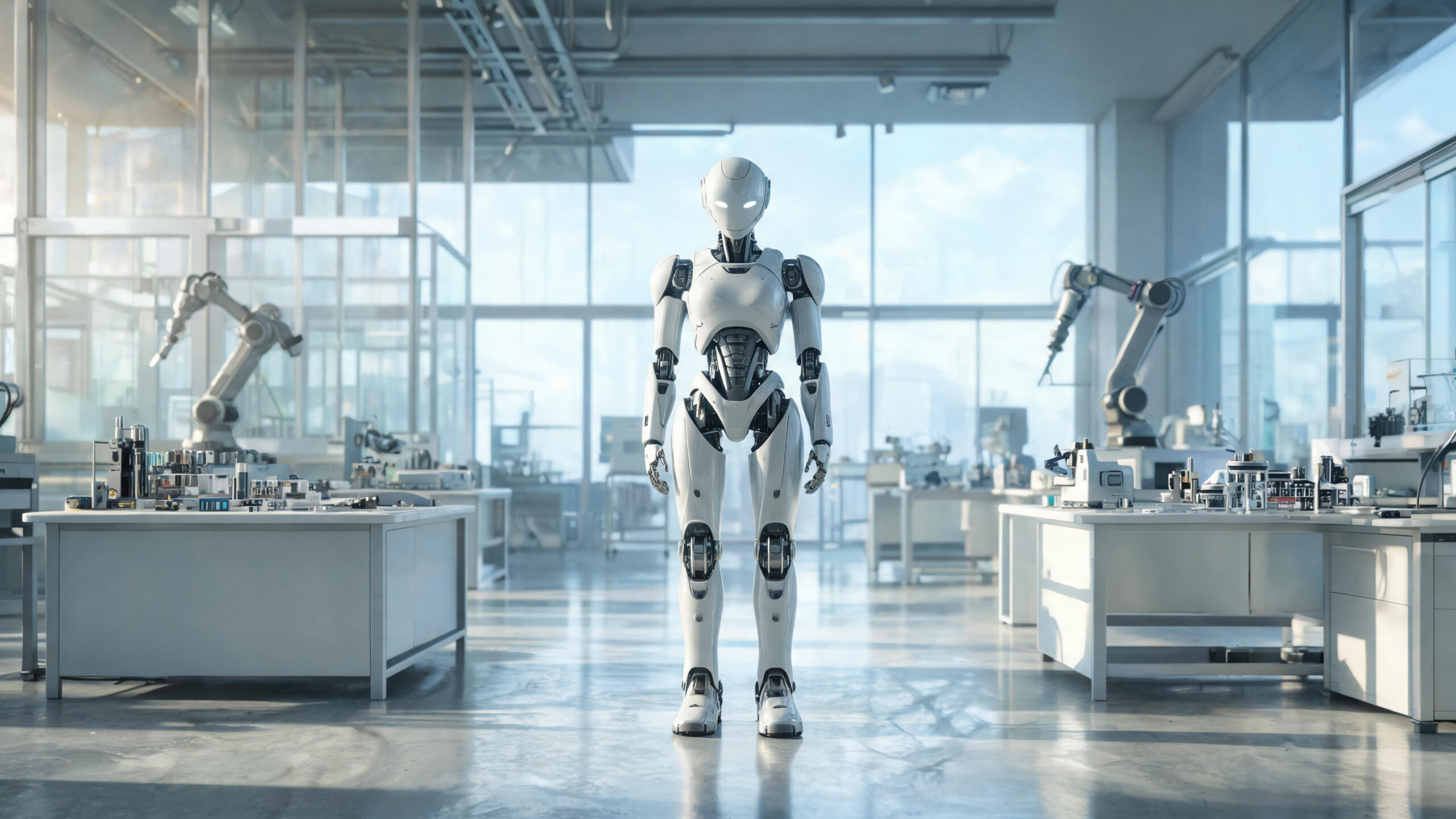
A humanoid robot is designed with a body structure that resembles the human form. Most humanoids have a head, torso, two arms, two hands or grippers, two legs, and an upright posture. The exact design varies widely. Some are full-body walking machines. Others have humanoid upper bodies mounted on wheels. Some prioritize dexterous hands, while others focus on balance, strength, or safe interaction with people. The purpose of the humanoid shape is not simply to look human. It is meant to let the robot operate in environments built for humans.
Factories, homes, offices, stores, hospitals, and warehouses are full of human-centered design. Door handles are positioned for human arms. Stairs are built for human legs. Shelves are arranged for human reach. Tools are shaped for human hands. Vehicles, control panels, carts, cabinets, ladders, kitchens, closets, and storage rooms all assume a person-shaped worker. A humanoid robot, at least in theory, can enter those existing spaces without requiring the entire environment to be rebuilt around the machine.
That is the main argument for humanoids. Instead of designing a custom robot for every task or redesigning buildings to fit machines, companies can build robots that fit the world as it already exists. This is a powerful idea, but it also creates enormous technical challenges. Human bodies are remarkably versatile. We balance, walk, grasp, twist, crouch, reach, carry, inspect, communicate, and adapt constantly. Recreating even a fraction of that flexibility in a machine is one of the hardest problems in robotics.
Why General-Purpose Robotics Is So Difficult
General-purpose robotics sounds simple until you examine what everyday physical work actually requires. A person picking up a box does not merely close their fingers around an object. They identify the object, estimate its weight, adjust their posture, choose a grip, coordinate muscles, respond to slipping, avoid nearby obstacles, and adapt if the box is damaged, wet, heavy, oddly shaped, or blocked by another object. Much of this happens automatically through years of embodied learning.
Robots do not naturally have that kind of embodied common sense. They must perceive the world through cameras, depth sensors, force sensors, microphones, inertial measurement units, and internal joint feedback. They must convert raw sensor data into useful understanding. They must know what objects are present, where those objects are, what those objects are likely to do when touched, and how to move safely around them. Then they must plan actions and execute them in real time. The physical world is messy. Lighting changes. Objects move. Floors are uneven. People step into the path. Tools are misplaced. Boxes deform. Doors stick. Cables get tangled. A robot that performs beautifully in a demonstration may struggle when the lighting is different, the object is slightly rotated, or the floor has an unexpected obstacle. This is why robotics is harder than many software-only AI tasks. A chatbot can generate a new sentence in a digital space. A humanoid robot must make decisions that affect motors, weight, balance, objects, and nearby people.
The Role of AI in Modern Humanoid Robots
Artificial intelligence is the reason humanoid robotics feels newly exciting. Earlier robots often depended on carefully programmed behaviors. Engineers had to define sequences of motion, rules, safety boundaries, and task-specific instructions. That approach works well in structured environments, but it does not scale easily to open-ended work. A general-purpose robot needs to learn, adapt, and interpret context.
Modern AI gives robots better perception, language understanding, planning, and task learning. Computer vision helps robots recognize objects, estimate depth, identify obstacles, and track movement. Machine learning helps robots improve from examples and data. Reinforcement learning can train robots in simulation before they attempt physical tasks. Large language models can help translate human instructions into goals, steps, and task plans. Vision-language models can connect what a robot sees with what a person asks it to do.
The most important shift is toward embodied AI, sometimes called physical AI. This is AI that does not just process words or images but controls a body in the real world. The robot must understand space, motion, force, timing, and cause-and-effect. It must know that a glass can break, a drawer must be pulled before something inside can be reached, and a heavy object may require two hands or a different grip. These are not purely language problems. They are physical intelligence problems.
What Humanoid Robots Can Do Today
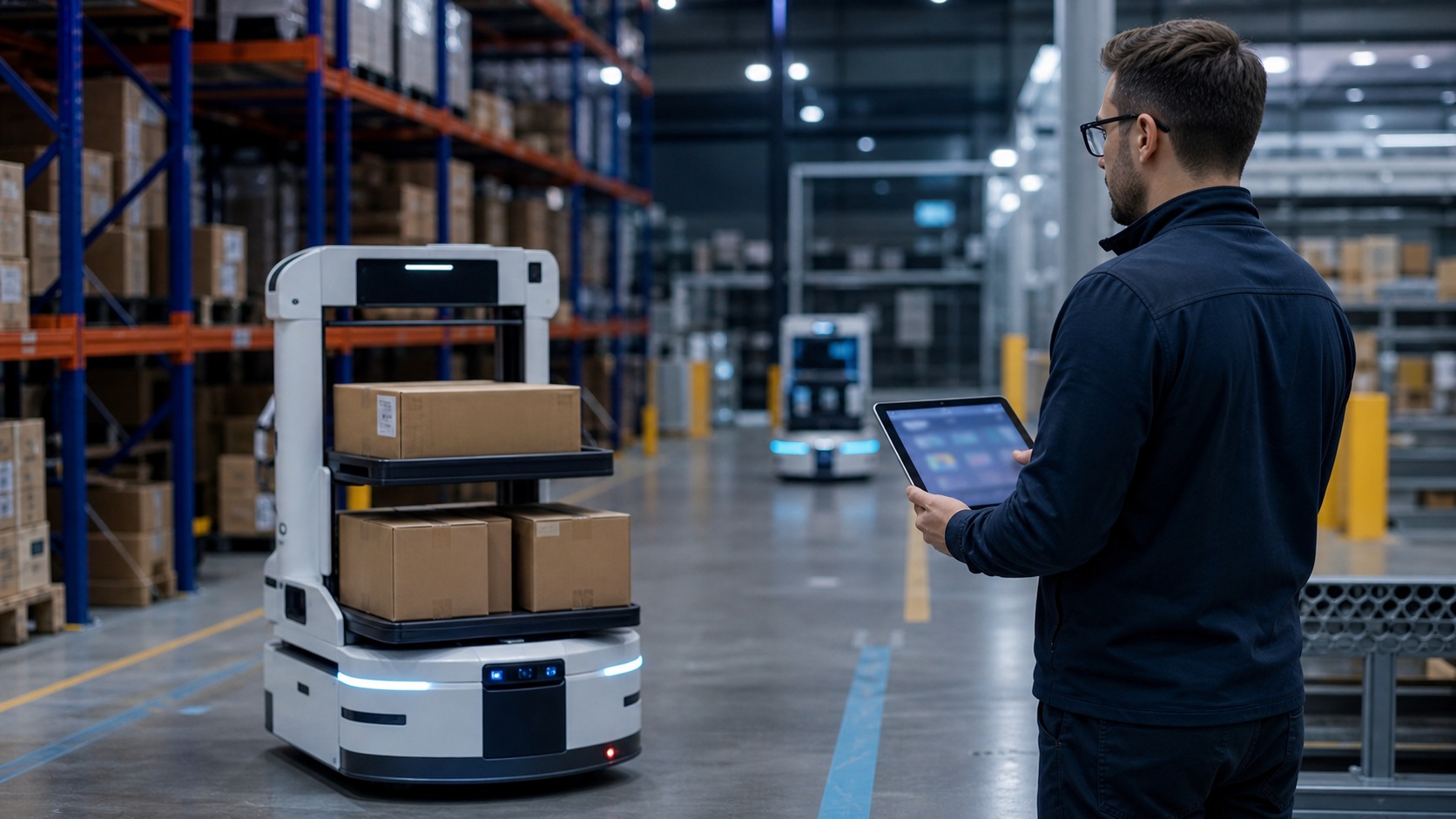
Humanoid robots today are most promising in controlled environments where tasks are repetitive but not completely rigid. Warehouses and factories are natural early targets. In these spaces, humanoids may carry totes, move packages, sort items, inspect equipment, deliver parts, operate carts, or assist with material handling. The environments are commercial, the labor demand is high, and the tasks often involve objects and layouts designed for humans.
Some humanoid robots can walk, balance, turn, squat, lift objects, and perform basic manipulation. Others can respond to voice commands, recognize common objects, or learn simple demonstrations. In controlled testing, humanoids can complete tasks that would have seemed astonishing a decade ago. They can move through workspaces, pick up items, place objects into bins, and recover from small disturbances. The best systems combine hardware, AI models, teleoperation data, simulation training, and safety controls. However, most humanoid robots are not yet ready to operate freely in unpredictable public settings. They usually need limited task scopes, supervised deployment, clear safety procedures, and controlled operating zones. Their abilities are improving, but they are not yet the equivalent of a human worker who can quickly understand a messy environment, improvise, and handle dozens of unexpected situations without support.
The Difference Between a Useful Robot and an Impressive Demo
Robotics demonstrations can be thrilling, but they do not always prove commercial readiness. A robot may perform a backflip, fold a shirt, pour a drink, or move boxes on video, yet still be too expensive, slow, fragile, or unreliable for everyday deployment. The difference between an impressive demo and a useful robot comes down to repeatability, safety, cost, uptime, maintenance, and integration into real workflows.
A useful robot must work over and over again, not just once under ideal conditions. It must operate safely around people and property. It must recover from minor errors without requiring constant human intervention. It must be durable enough for daily use. It must justify its price through productivity, labor support, quality improvement, safety gains, or operational flexibility. Most importantly, it must solve a real problem better than existing alternatives.
This is where many humanoid robots still face a steep climb. Industrial robotic arms already perform many tasks extremely well. Autonomous mobile robots already move goods through warehouses. Specialized machines often beat humanoids on speed, cost, strength, and reliability. Humanoids need to prove that their flexibility is valuable enough to offset their complexity. Their advantage is not that they are perfect at one task. Their advantage is that they may eventually be good enough at many tasks.
Why Factories and Warehouses May Come First
The first widely useful humanoid robots are likely to appear in business environments before homes. Factories, warehouses, logistics centers, and industrial sites offer a clearer path to return on investment. Companies can measure labor gaps, productivity, error rates, injury risks, throughput, and downtime. They can create controlled zones, standardize procedures, and train staff to work with robots. They can also assign robots to specific tasks instead of expecting them to understand every possible human need. Warehouses are especially attractive because many operations still involve repetitive manual labor. Workers move items, lift packages, scan products, restock shelves, and transport goods across large spaces. These tasks are physically demanding and often difficult to staff. A humanoid robot that can safely assist with material handling for long shifts could become valuable even if it is not fully general-purpose.
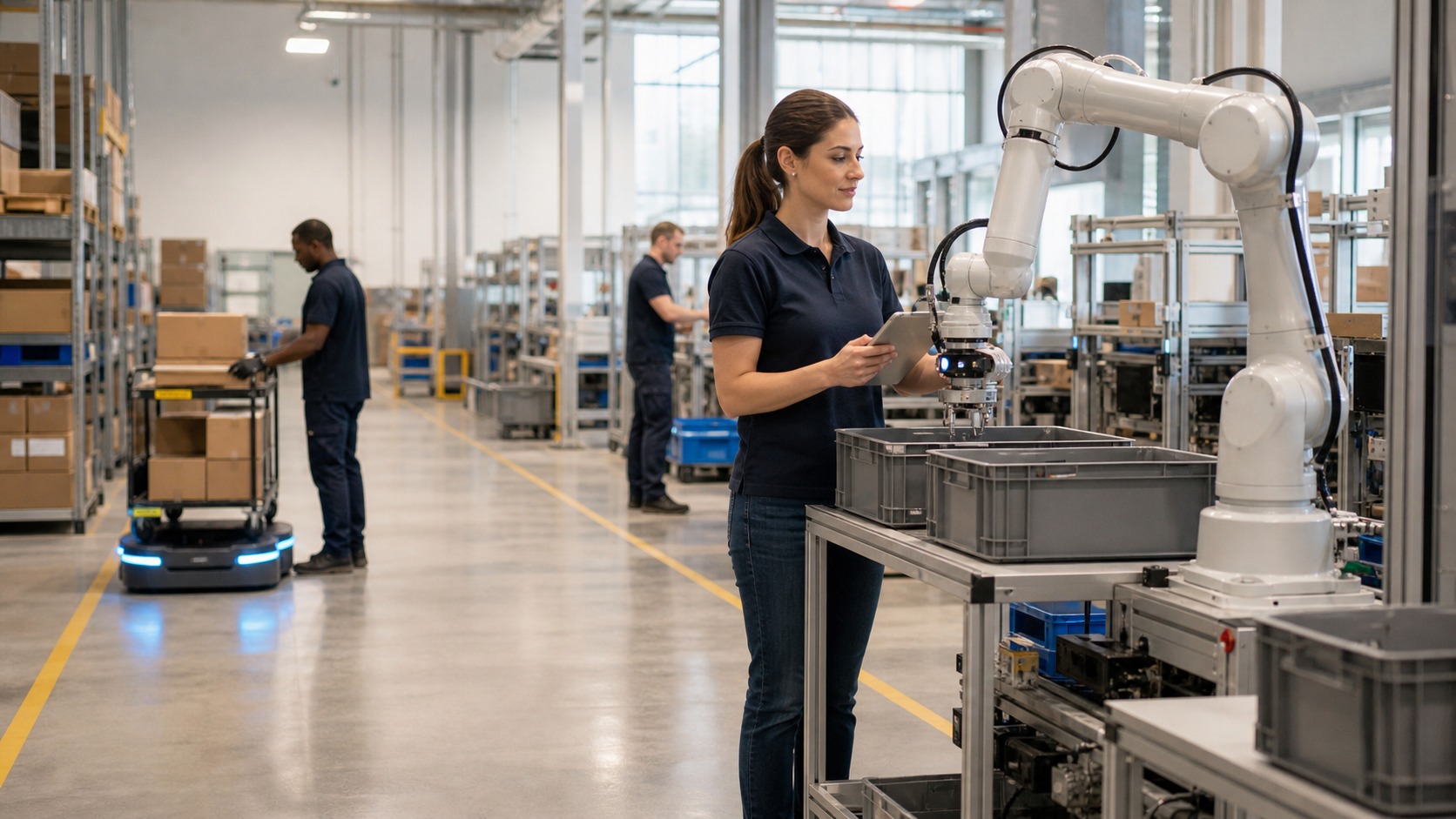
Factories offer another strong opportunity. Many manufacturing environments already use automation, sensors, safety systems, and robotics expertise. A humanoid robot could fill gaps between fixed automation systems. It might carry components, inspect workstations, fetch tools, or perform tasks that are too variable for a traditional robotic arm but too repetitive or hazardous for human workers. In this context, humanoid robots do not need to replace the entire workforce. They need to become flexible helpers in specific workflows.
Why Home Robots Are Much Harder
Home robots are exciting, but homes are among the hardest environments for general-purpose robotics. Every home is different. Furniture layouts vary. Objects are unstructured. Lighting changes throughout the day. Pets, children, cords, clutter, rugs, stairs, dishes, toys, laundry, and fragile items create constant complexity. A robot in a warehouse may handle standardized bins. A robot in a home may face a half-open pantry, a slippery sock on the floor, a spilled drink, and a verbal request that depends on family habits.
Home users also have higher expectations and lower tolerance for failure. A business may accept a robot that needs professional setup and occasional supervision. A household expects a machine to be affordable, quiet, safe, helpful, and easy to use. It must not damage furniture, scare pets, mishandle delicate items, or create more work than it saves. That is an extremely high bar.
For this reason, domestic humanoid robots may arrive slowly. Early home robots may perform narrow tasks, such as cleaning, carrying, monitoring, simple fetching, or assisting people with mobility needs. Full household general-purpose robots that can cook, clean, organize, fold laundry, handle tools, and respond gracefully to complex requests are still likely farther away than factory and warehouse assistants.
The Hardware Challenge: Bodies Are Expensive
AI gets much of the attention, but hardware remains one of the biggest barriers. Humanoid robots need strong, precise, lightweight, durable, and energy-efficient bodies. They require motors or actuators at many joints. They need sensors, processors, batteries, cooling systems, structural frames, hands, feet, and safety mechanisms. Every added capability increases cost and complexity.
Hands are especially difficult. Human hands are extraordinary tools. They can grip a hammer, hold an egg, tie a knot, turn a key, open packaging, fold cloth, and feel subtle changes in pressure. Robotic hands can be dexterous, but building ones that are affordable, robust, sensitive, and easy to control is difficult. Many practical humanoid systems may use simpler grippers because they are more reliable, even if they look less human. Battery life is another challenge. Walking, balancing, lifting, sensing, and computing all consume power. A commercially useful robot needs enough runtime to justify deployment. It also needs charging systems, service routines, and predictable maintenance cycles. A robot that performs well for twenty minutes in a lab is not the same as a machine that can work through a shift in a logistics center.
The Software Challenge: Robots Need Common Sense
Even with strong hardware, humanoid robots need software that can handle uncertainty. They must interpret human instructions, understand goals, break tasks into steps, and react when reality does not match the plan. This requires perception, planning, control, memory, and reasoning to work together.
A person might say, “Take that box to the loading area,” and understand the meaning from context. A robot must identify which box, where the loading area is, whether the path is clear, whether the box is safe to lift, how to grip it, how to walk while carrying it, where to place it, and what to do if someone blocks the route. Each step contains potential failure points.
This is why robot foundation models are so important. These models aim to give robots broader capabilities by training on large amounts of physical task data, simulation data, video, teleoperation examples, and sensor feedback. The goal is to create systems that can transfer learning from one task to another. Instead of programming every behavior manually, developers want robots that can generalize from experience. That remains an unfinished challenge, but progress in AI is making it more realistic.
Safety Is the Make-or-Break Issue
Humanoid robots must be safe before they can become common. A machine with human-like movement, metal parts, motors, batteries, sensors, and decision-making software must operate under strict safety expectations. It may work near people, vehicles, shelves, tools, equipment, or fragile objects. A small mistake could cause property damage or injury.
Safety is not only about avoiding collisions. Robots must understand boundaries, stop when uncertain, handle errors gracefully, protect user privacy, secure data, resist hacking, and follow operational rules. Businesses will need training procedures, safety certifications, maintenance plans, emergency stop systems, and monitoring tools. Homes will require even stronger trust because children, pets, guests, and unpredictable situations are involved. The safest early deployments will likely involve supervised work zones and limited tasks. Over time, as reliability improves, robots may gain more independence. But widespread adoption depends on confidence. People need to believe that a humanoid robot will behave predictably, respect space, and fail safely.
The Economics of Humanoid Robots
Even if humanoid robots can perform useful tasks, they must make economic sense. Businesses will compare robot costs against labor availability, wages, productivity, uptime, training, insurance, maintenance, and operational flexibility. A robot does not need to be cheaper than a human in every way to be valuable. It may work in hazardous areas, fill difficult shifts, reduce injuries, improve consistency, or support human teams during labor shortages.
The business model may matter as much as the technology. Robotics as a Service could allow companies to rent robots instead of buying them outright. This can reduce upfront costs and make adoption easier. If vendors provide maintenance, updates, support, and performance guarantees, businesses may be more willing to experiment.
For consumers, affordability will be much harder. A home humanoid robot would need to be priced within reach, useful enough to justify the purchase, and reliable enough to avoid frustration. Until costs fall dramatically, humanoid robots are likely to remain more common in commercial and industrial settings.
How Close Are We Really?
We are close to useful humanoid robots in narrow commercial roles. We are not yet close to fully general-purpose humanoid robots that can safely and affordably handle the open-ended complexity of everyday life. The next few years will likely bring more pilots, more workplace deployments, better manipulation, improved AI control systems, and stronger integration between language models and physical machines.
The most realistic near-term future is not a robot butler in every home. It is a growing number of humanoid robots performing defined tasks in warehouses, factories, labs, hospitals, and industrial environments. These robots may start as assistants, movers, inspectors, and machine tenders. They will be useful because they operate in human-designed spaces and can be reassigned more easily than traditional automation. True general-purpose robots will require major improvements in reliability, dexterity, safety, energy efficiency, reasoning, affordability, and real-world learning. They must become less like impressive prototypes and more like dependable tools. That transition is underway, but it will not happen all at once.
The Future of Humanoid Robots
The future of humanoid robots will likely unfold in stages. First, they will prove themselves in structured business environments. Then they will expand into more flexible service roles. Later, as hardware becomes cheaper and AI becomes more capable, they may enter homes, schools, care settings, and public spaces in meaningful numbers.
Humanoid robots could eventually reshape how society thinks about labor, independence, productivity, elder care, disaster response, manufacturing, and physical assistance. They may help with dangerous work, repetitive work, heavy lifting, inspection, maintenance, and support for people who need help with daily tasks. They may also raise difficult questions about jobs, privacy, accountability, security, and human connection.
The excitement around humanoid robots is justified, but so is the caution. These machines are no longer pure science fiction, yet they are not magic. They represent the convergence of AI, mechanical engineering, sensors, software, materials, and human-centered design. Their progress will be measured not by viral videos alone, but by whether they can reliably do useful work in the real world.
The most honest answer is this: humanoid robots are closer than they have ever been, but useful general-purpose robots are still an emerging frontier. The first wave will be specialized, supervised, and commercial. The long-term vision is broader, more flexible, and far more transformative. If AI gave machines the ability to talk, robotics may give AI the ability to act. That is why humanoid robots matter, and why the race to build them has only just begun.