Physical AI is the next major step in artificial intelligence: the moment AI stops being only something you type into and starts becoming something that can move through the world. Instead of simply generating text, images, code, or recommendations, physical AI connects intelligence to bodies. It gives machines the ability to see a room, understand objects, sense movement, touch materials, make decisions, and act in real environments. This is why physical AI is so exciting. A chatbot can explain how to stack boxes, but a physical AI robot must actually pick up the boxes, balance its weight, avoid obstacles, adjust its grip, and place each box correctly. A digital AI model can describe how to open a door, but a robot must locate the handle, reach toward it, apply force, rotate the mechanism, pull or push at the right angle, and avoid bumping into the frame. The jump from thinking in software to acting in the real world is enormous. Physical AI is not just robotics with smarter software. It is a fusion of artificial intelligence, sensors, robotics, machine learning, computer vision, control systems, simulation, and mechanical design. It is about helping machines understand the physical world well enough to operate within it. That means learning not only what objects are called, but how they behave. A cup can be lifted. A cable can tangle. A glass can break. A wet floor can cause slipping. A drawer must be pulled before something inside can be reached. In simple terms, physical AI is artificial intelligence with real-world awareness and real-world action. It is the foundation behind smarter robots, autonomous drones, self-driving machines, warehouse automation, humanoid assistants, robotic arms, agricultural robots, surgical systems, and future machines that may one day help in homes, factories, hospitals, disaster zones, and public spaces.
A: It is about using AI to improve automation, triage, optimization, detection, and decision support while keeping review and context in place.
A: No. Outputs need testing, source checks, and human judgment.
A: Common risks include workflow mismatch, hidden errors, compliance gaps, and weak measurement.
A: The most important data is the data that matches the real task and user decision.
A: No. Prompts help, but data quality, tool design, and review matter too.
A: Humans should stay involved when outcomes affect people, money, safety, privacy, or trust.
A: Test outputs against real examples, track errors, and measure whether the workflow improves.
A: Yes. Fluency is not proof of accuracy.
A: Clear goals, good data, review points, monitoring, and a fallback plan.
A: Accountability stays with domain experts who judge outputs in context.
Why Physical AI Matters Now
For years, the biggest breakthroughs in AI happened on screens. AI became better at writing, translating, coding, generating images, summarizing documents, answering questions, and analyzing digital data. These advances are powerful, but they mostly live inside phones, computers, browsers, apps, and cloud systems. Physical AI extends that intelligence into the world of motion, space, materials, objects, and machines.
This matters because most of human life is physical. We work with our hands. We move through buildings. We cook, clean, build, repair, drive, farm, ship, assemble, inspect, care, carry, and maintain. Huge parts of the global economy still depend on physical labor and real-world operations. Warehouses need goods moved. Farms need crops monitored. Hospitals need supplies delivered. Factories need parts handled. Homes need chores completed. Infrastructure needs inspection. Hazardous environments need machines that can go where people should not.
Physical AI could help solve problems that software alone cannot. A better app can improve communication, but it cannot unload a truck. A smarter chatbot can answer a maintenance question, but it cannot inspect a pipeline. A predictive model can identify risk, but it cannot repair a machine. Physical AI closes the gap between digital intelligence and physical execution. The timing is important because several technologies are maturing at once. AI models are improving. Robot hardware is becoming more capable. Sensors are cheaper and more precise. Simulation environments can train machines before real-world testing. Edge computing allows AI to run closer to the machine. Batteries, actuators, cameras, and control systems are improving. Together, these advances are creating a new generation of robots that can do more than repeat fixed motions.
How Robots Sense the Real World
A robot cannot understand the world unless it can sense it. Human beings rely on vision, hearing, touch, balance, and body awareness. Robots need machine equivalents. They use cameras, depth sensors, lidar, radar, microphones, force sensors, torque sensors, pressure sensors, inertial measurement units, temperature sensors, proximity sensors, and internal joint feedback to build a picture of what is happening around them.
Computer vision gives robots the ability to identify objects, detect obstacles, understand shapes, estimate distances, and track movement. Depth cameras help robots know how far away something is. Lidar can map spaces by measuring reflected light. Force sensors can detect pressure and resistance. Joint sensors tell a robot where its limbs are positioned. Together, these inputs help the robot answer basic but essential questions: Where am I? What is around me? What can I touch? What is moving? What should I avoid?
Sensing the world is harder than it sounds. Lighting changes. Objects overlap. Surfaces reflect. Shadows interfere. Transparent glass can confuse depth systems. A box may look similar to another box but weigh much more. A floor may appear flat but include a small ridge or cable. A human can often understand these situations instantly because we have years of embodied experience. Robots must learn to interpret them through data, sensors, and models.
Physical AI depends on turning raw sensor information into useful understanding. A camera feed is just pixels until the AI recognizes objects and spatial relationships. A pressure reading is just a number until the robot understands that its grip is too tight or too loose. The real challenge is not collecting data; it is making that data meaningful enough to guide safe and useful action.
How Robots Learn Through Movement
Physical AI is built on action. A robot learns about the world not only by looking at it, but by moving through it. Movement teaches cause and effect. When a robot pushes a door, it learns whether the door swings, sticks, or stays locked. When it lifts an object, it learns about weight, balance, and grip. When it walks across a surface, it learns about friction, slope, and stability.
This is one reason robotics is so different from traditional software AI. A language model can learn from massive amounts of text. A robot needs physical experience or realistic simulations of physical experience. It must learn what happens when motors turn, joints bend, wheels roll, arms extend, hands close, and objects shift. It must connect decisions to consequences. Robots can learn through several approaches. In imitation learning, a robot learns by observing demonstrations from humans or other systems. In reinforcement learning, it improves through trial, feedback, and rewards. In teleoperation, a human controls the robot while the system collects valuable training data. In simulation, robots practice in digital worlds before transferring skills to physical hardware. Each method helps the machine build a library of useful behaviors.
The most powerful future systems will likely combine all of these methods. A robot may learn basic movement in simulation, refine tasks through human demonstration, collect real-world data during deployment, and improve over time through updates. The goal is not just to program a robot for one job. The goal is to help it adapt to new variations of a task without starting from zero.
The Role of Embodied Intelligence
Embodied intelligence means intelligence that is shaped by having a body. This idea is central to physical AI. A system that only processes language understands the world indirectly, through descriptions. A robot with a body experiences the world through movement, contact, resistance, balance, and spatial limits. It learns that the body matters. For example, reaching for an object is not just a visual problem. The robot must know the length of its arm, the angle of its joints, the width of its gripper, the weight of the object, the position of nearby obstacles, and whether it can remain balanced while reaching. Intelligence is tied to the body’s abilities and constraints.
Embodied intelligence also helps explain why human-like tasks are so difficult. People make everyday physical intelligence look effortless. We pick up oddly shaped objects, squeeze through tight spaces, adjust our steps on uneven ground, catch falling items, and coordinate both hands without consciously calculating every movement. For robots, these actions require constant perception, planning, control, and feedback. Physical AI aims to give machines this kind of practical understanding. Not human consciousness, not emotion, and not true lived experience, but functional awareness of bodies, objects, space, and action. A physically intelligent robot does not simply know the word “fragile.” It adjusts how it handles a fragile object.
Physical AI and Humanoid Robots
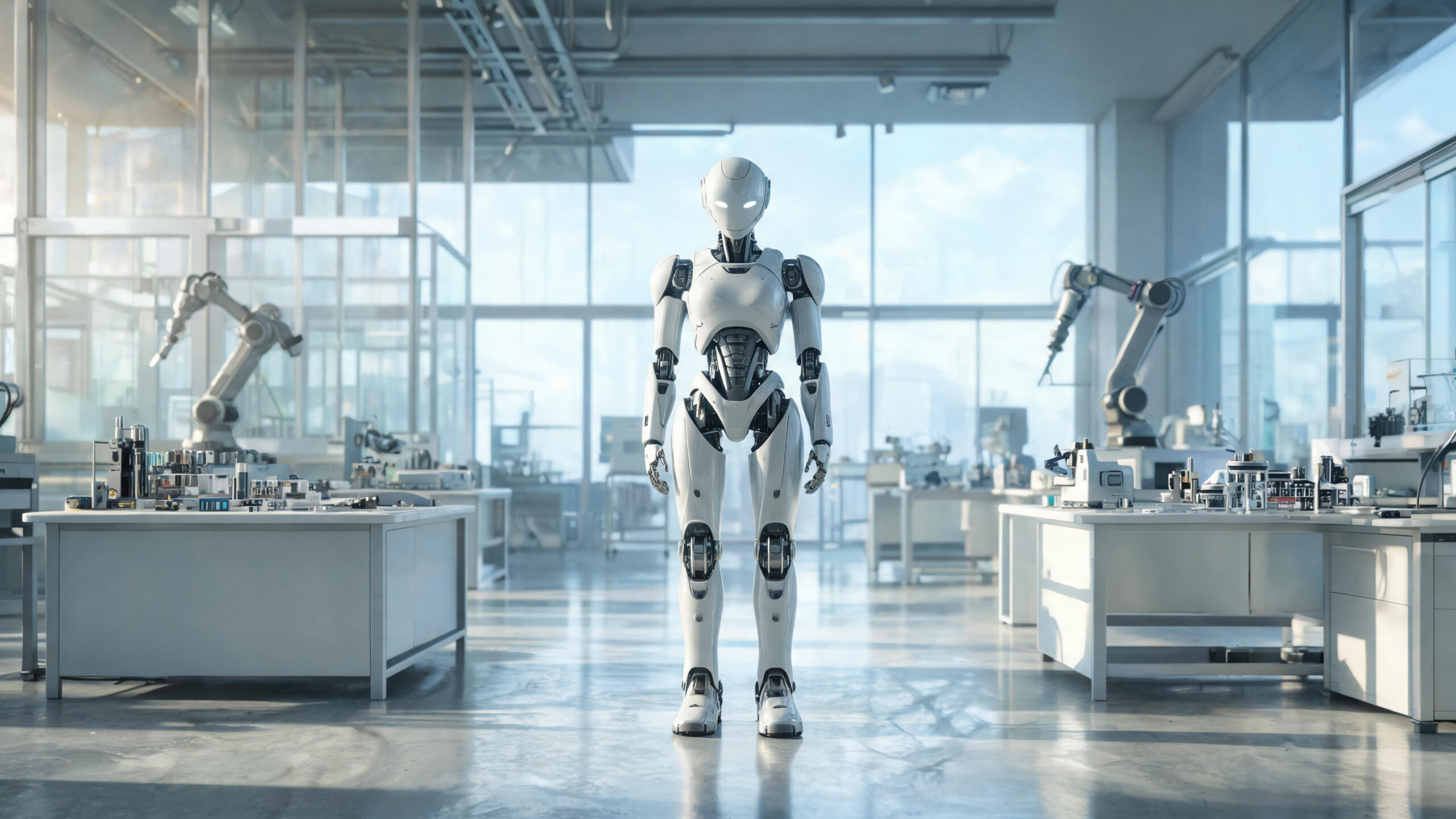
Humanoid robots are one of the most visible examples of physical AI. They are designed to move through environments built for people, use tools shaped for human hands, and perform tasks that require general physical flexibility. Their human-like form makes them exciting, but also technically demanding.
A humanoid robot must balance, walk, turn, bend, reach, grasp, carry, and recover from disturbances. It must coordinate many joints and sensors at once. It must understand where its body is in relation to the world. If it misjudges a step, it could fall. If it applies too much force, it could break something. If it misunderstands a command, it could perform the wrong action in a real environment.
Physical AI gives humanoid robots the intelligence layer they need to become more useful. Instead of relying only on preprogrammed motions, future humanoids will need to interpret instructions, identify objects, plan tasks, and adapt to changing situations. They may work in warehouses, factories, hospitals, offices, retail spaces, and eventually homes. Their value will depend less on looking human and more on understanding physical work. The most realistic early humanoid robots will not be all-purpose household helpers. They will likely perform controlled commercial tasks: moving items, loading machines, carrying tools, inspecting areas, or assisting human workers. Over time, as physical AI improves, those tasks may become broader and more flexible.
Physical AI in Warehouses and Factories
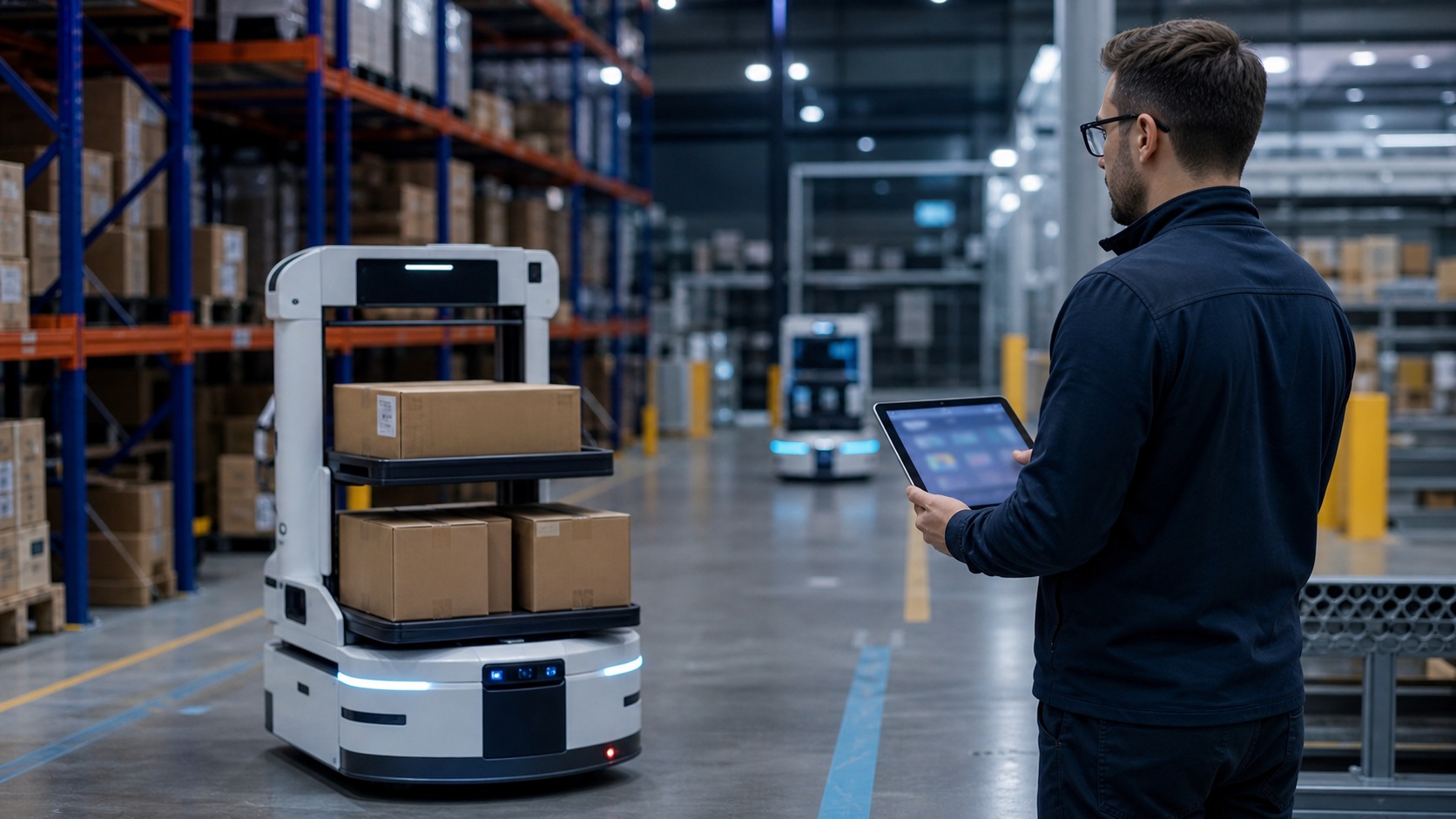
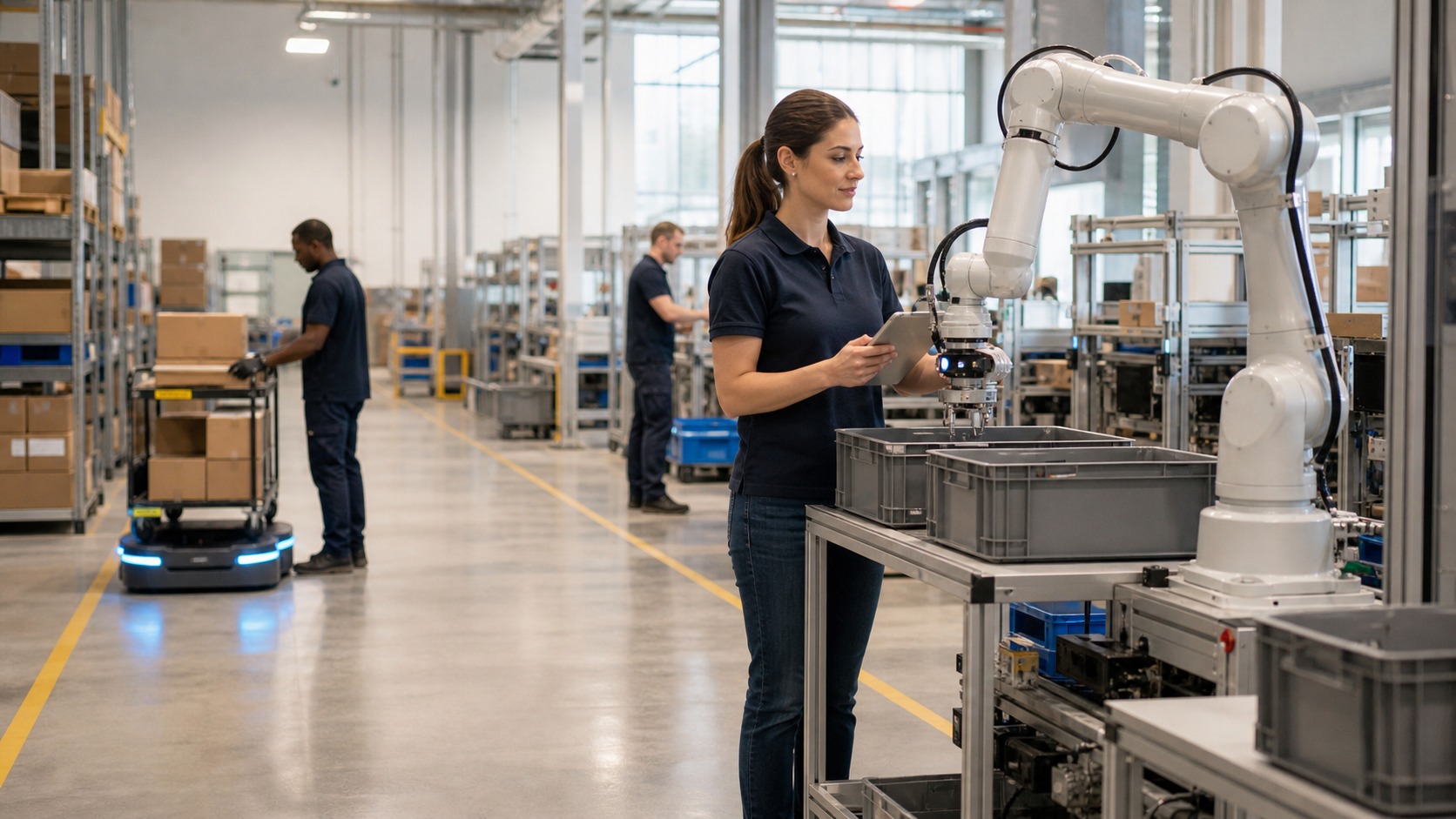
Warehouses and factories are among the strongest early markets for physical AI. These environments are structured enough for automation but still full of tasks that require flexibility. Products vary. Boxes shift. Machines need tending. Inventory moves constantly. Workers may need help with lifting, sorting, inspection, and transport. Traditional automation works best when the environment is predictable. A fixed robotic arm on an assembly line can repeat the same motion thousands of times with precision. But many real workplaces contain changing tasks that are difficult to fully automate with rigid systems. Physical AI makes robots more adaptable. A robot can use vision to identify objects, adjust its grip, navigate around obstacles, and respond to real-time changes.
In logistics, physical AI can help robots move goods through warehouses, pick items from shelves, sort packages, inspect pallets, or support fulfillment operations. In manufacturing, it can support quality control, material handling, assembly assistance, machine monitoring, and maintenance. The biggest value may come from robots that fill the gap between fully fixed automation and human-only labor. Businesses care about reliability, safety, cost, and return on investment. A physical AI robot does not need to do everything to be valuable. It needs to do specific tasks well enough, consistently enough, and safely enough to improve operations. That is why commercial environments may drive the first wave of useful physical AI deployment.
Physical AI Beyond the Factory
Physical AI reaches far beyond manufacturing. In agriculture, robots can monitor crops, detect disease, pick fruit, apply treatments, and navigate fields. In healthcare, robots may deliver supplies, assist with rehabilitation, support surgery, or help with patient mobility. In construction, machines may inspect sites, move materials, scan progress, and support repetitive or hazardous tasks.
In energy and utilities, physical AI can support inspection of power lines, wind turbines, pipelines, solar farms, and industrial facilities. In disaster response, robots can enter dangerous areas after fires, earthquakes, chemical spills, or structural collapses. In ocean exploration, underwater robots can inspect infrastructure and study environments too difficult for humans to reach. In space, autonomous robots can explore, repair, and prepare environments beyond Earth.
The common theme is that physical AI becomes most valuable where the work is repetitive, dangerous, remote, physically demanding, or difficult to staff. It can extend human capability without requiring people to be present in every risky or exhausting environment. Home use is also part of the long-term vision, but it is harder. Homes are unpredictable and deeply personal. A home robot would need to handle clutter, pets, children, fragile objects, varied layouts, privacy concerns, and high expectations. Physical AI will need to mature significantly before general-purpose domestic robots become common.
Why Simulation Is So Important
Robots need practice, but practicing in the real world can be slow, expensive, and risky. A robot that falls repeatedly may damage itself. A machine that makes mistakes around people or objects can create safety issues. Simulation helps solve this problem by giving robots digital training environments where they can learn faster and fail safely. In simulation, a robot can practice walking, grasping, navigating, lifting, and interacting with objects thousands or millions of times. Developers can adjust lighting, surfaces, object shapes, weights, layouts, and obstacles. A robot can learn what works before being tested in the physical world.
The challenge is transferring skills from simulation to reality. Digital worlds are never perfect. Real surfaces have friction, flex, dust, dents, shadows, and imperfections. Objects behave in slightly unpredictable ways. This gap between simulated training and real-world performance is called the sim-to-real gap. Physical AI research works to reduce this gap so robots can learn in virtual environments and apply those lessons successfully in actual spaces. As simulation becomes more realistic and AI models become better at adapting, robot training can accelerate dramatically. This could be one of the major reasons physical AI improves faster over the next decade than it did in previous eras.
The Challenge of Touch and Dexterity
Vision is important, but touch may be just as critical. Many physical tasks require knowing how much force to use. A robot must hold a heavy tool firmly, but handle a glass gently. It must know when an object is slipping, when resistance means a drawer is stuck, and when pressure may damage something.
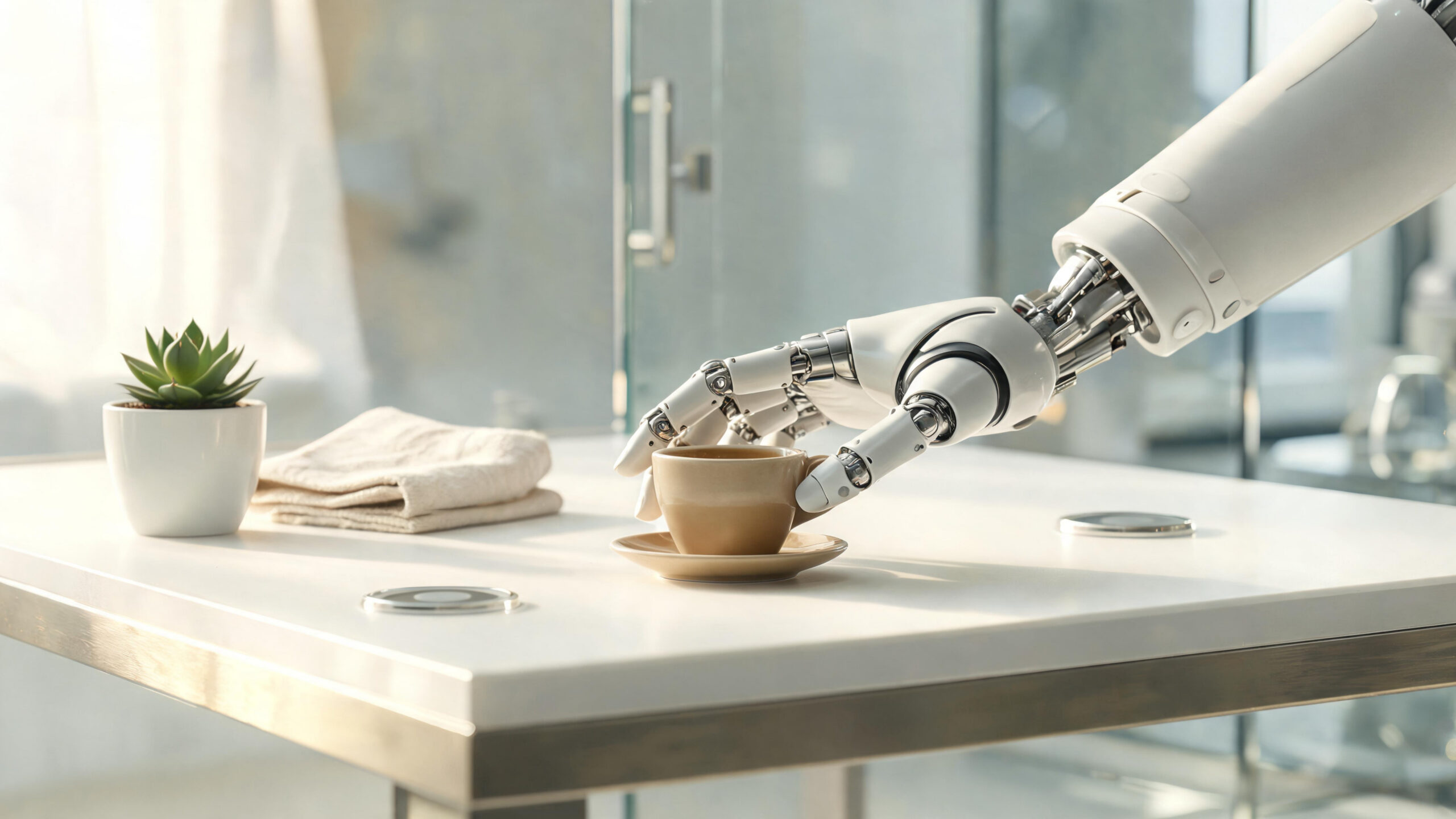
Dexterity is one of the hardest problems in physical AI. Human hands are incredibly versatile. They combine strength, sensitivity, flexibility, and fine motor control. Robotic hands can be advanced, but they are often expensive, fragile, or difficult to control. Simpler grippers are more reliable but less flexible.
For many practical tasks, robots may not need human-level hands. A warehouse robot may only need to handle boxes and totes. A factory robot may use specialized end effectors. A surgical robot may use precise instruments. But for true general-purpose robots, dexterity matters. The more varied the task, the more important touch and manipulation become. Physical AI must learn not only where objects are, but how to interact with them. That means understanding texture, weight, shape, friction, flexibility, and force. This is where machines still lag far behind humans.
Safety, Trust, and Real-World Consequences
Physical AI has real-world consequences. A software error might produce a bad sentence. A robot error could break equipment, damage property, block a pathway, or injure someone. That makes safety one of the most important parts of physical AI development. Safe robots need reliable perception, predictable behavior, emergency stop systems, secure software, careful testing, and clear operating boundaries. They must know when to slow down, stop, ask for help, or avoid action. They must be designed to fail safely. In workplaces, this means training, procedures, compliance, and monitoring. In homes and public spaces, it means even higher levels of trust.
Cybersecurity is also critical. A connected robot is not just a computer; it is a computer that can move. If physical AI systems are hacked, misused, or poorly secured, the risks become much more serious. Future robots will need strong protections for data, control systems, identity, remote access, and updates. Trust will determine adoption. People do not need robots to be perfect, but they do need them to be dependable, understandable, and safe. Physical AI must earn confidence through performance, transparency, and careful design.
How Physical AI Changes the Future of Work
Physical AI could reshape work by automating tasks that were previously too variable for machines. This does not mean every human worker is replaced by a robot. More likely, physical AI will change workflows, create new roles, and shift which tasks humans perform.
Robots may handle repetitive lifting, hazardous inspection, material movement, cleaning, sorting, and monitoring. Humans may focus more on supervision, problem-solving, customer interaction, maintenance, planning, and creative work. New jobs may emerge around robot training, fleet management, safety operations, repair, integration, and AI workflow design.
The transition will not be evenly distributed. Some industries will adopt physical AI quickly because the business case is clear. Others will move slowly because tasks are too unpredictable, costs are too high, or regulations are complex. The most successful deployments will likely be those where robots support human teams instead of being forced into unrealistic all-or-nothing automation. Physical AI raises important questions about wages, skills, safety, productivity, and access. Companies, workers, policymakers, and educators will need to prepare for a world where intelligent machines can increasingly participate in physical labor.
How Close Are We to Truly Intelligent Robots?
Physical AI is advancing quickly, but truly general-purpose real-world robots remain difficult. Today’s robots can be impressive in controlled settings, but they still struggle with open-ended environments, delicate manipulation, common sense, affordability, and long-term reliability. A robot may perform one task well and fail at a slightly different version of the same task. Near-term progress will likely come from specialized physical AI systems that become more flexible over time. Warehouse robots will improve at handling varied packages. Factory robots will adapt to more workflows. Drones will become better at autonomous inspection. Humanoid robots will learn more practical tasks in commercial spaces. Agricultural robots will handle more field conditions.
The long-term dream is a robot that can understand a spoken goal, observe the environment, plan a sequence of actions, use tools, recover from surprises, and complete useful work safely. We are not fully there yet. But the building blocks are coming together. Physical AI is not a single invention. It is a frontier made of many breakthroughs: better sensors, smarter AI models, stronger robot bodies, more realistic simulations, safer control systems, richer training data, and deeper understanding of real-world interaction.
The Future of Physical AI
The future of physical AI will be defined by machines that can act, not just answer. Robots will become more aware of objects, spaces, people, and motion. They will learn from demonstrations, simulations, and real-world experience. They will move into industries where physical work is costly, dangerous, repetitive, or difficult to staff. Over time, they may become part of daily life in ways that feel ordinary rather than futuristic.
The most exciting part of physical AI is that it gives artificial intelligence a direct relationship with the world. It transforms AI from a system that describes action into a system that performs action. It makes intelligence measurable not only by what a machine says, but by what it can safely and usefully do.
Physical AI is still young. Many promises remain unproven. Many demonstrations are easier than real deployment. Many robots are still too expensive, too limited, or too fragile for everyday use. But the direction is clear. AI is moving from screens into machines, from language into motion, from digital prediction into physical capability. If the last era of AI was about teaching machines to understand information, the next era may be about teaching machines to understand reality. Physical AI is the bridge between intelligence and action. It is how robots are learning not just to compute the world, but to live and work inside it.