Factories Are Learning To Adapt
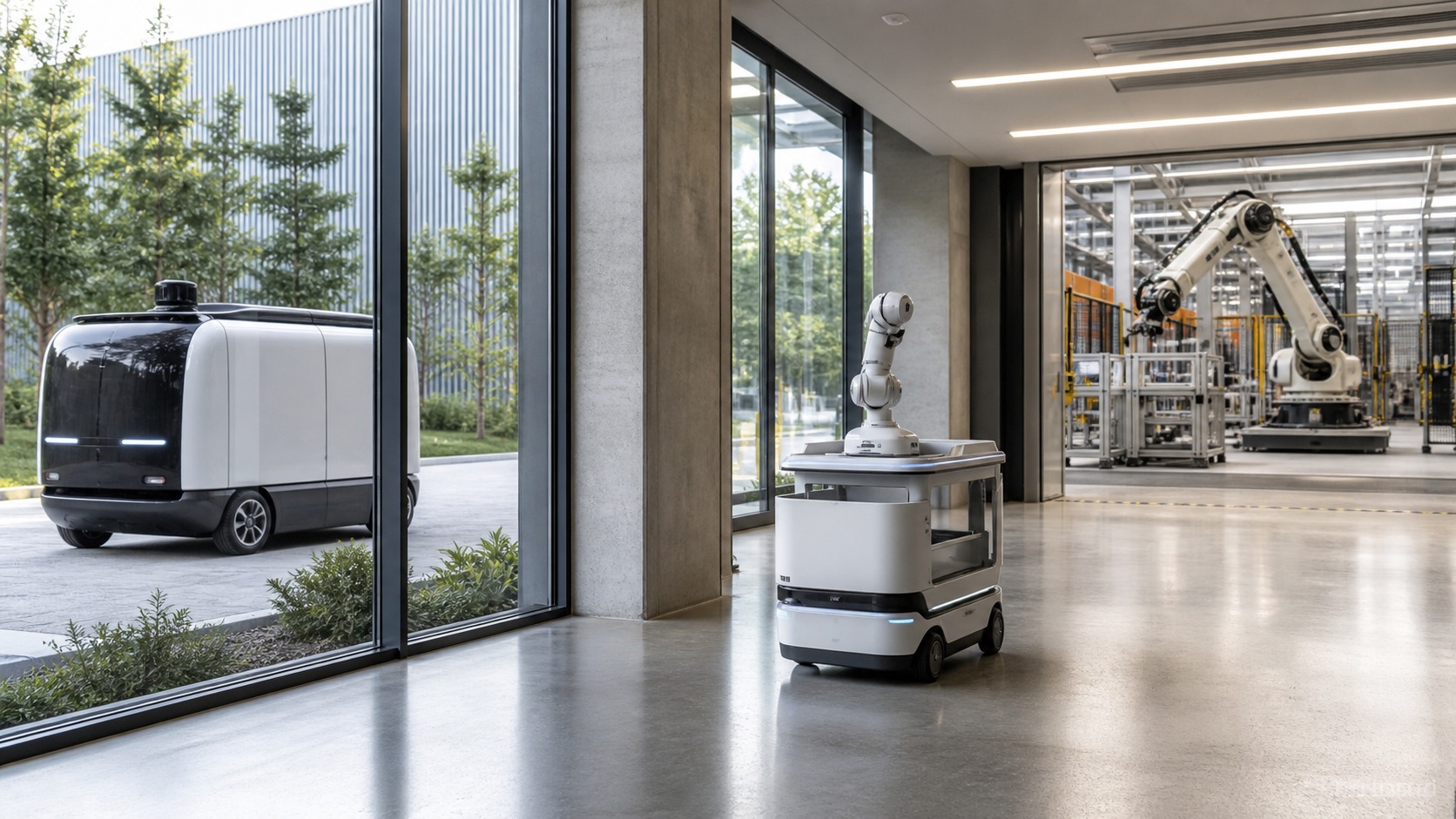
AI-powered robots are changing manufacturing because they make factory automation less rigid. Older industrial robots were excellent at repeating a carefully programmed motion in a protected cell, but they struggled when parts shifted, product mixes changed, or inspection required judgment. Modern robotic systems combine cameras, force sensors, machine learning, planning software, and human oversight so they can recognize variation and respond with more useful behavior. The result is not a factory where people vanish. It is a factory where machines handle more sensing, checking, lifting, sorting, and routine adjustment while people design workflows, solve exceptions, and decide how automation should improve quality instead of only increasing speed.
A: It is about using AI to improve automation, triage, optimization, detection, and decision support while keeping review and context in place.
A: No. Outputs need testing, source checks, and human judgment.
A: Common risks include workflow mismatch, hidden errors, compliance gaps, and weak measurement.
A: The most important data is the data that matches the real task and user decision.
A: No. Prompts help, but data quality, tool design, and review matter too.
A: Humans should stay involved when outcomes affect people, money, safety, privacy, or trust.
A: Test outputs against real examples, track errors, and measure whether the workflow improves.
A: Yes. Fluency is not proof of accuracy.
A: Clear goals, good data, review points, monitoring, and a fallback plan.
A: Accountability stays with domain experts who judge outputs in context.
Why Manufacturing Is A Natural Fit For AI Robots
Manufacturing gives AI-powered robots something many AI systems lack: repeated work with visible outcomes. A robot can attempt a grasp, inspect a weld, place a component, or move a cart, and the result can be measured. Did the part fit? Did the surface pass inspection? Did the station stay on schedule? That feedback makes factories a strong environment for practical AI because teams can connect model behavior to quality, throughput, safety, and cost.
The challenge is that factory repetition is never as clean as it looks from a distance. Parts arrive slightly rotated, bins are overfilled, labels wrinkle, metal reflects light, and workers need room to intervene. AI helps by letting robots sense and respond to those variations, but the surrounding process still matters. A factory that wants flexible robots must also think about fixtures, data capture, lighting, maintenance, training, and what happens when the robot is uncertain.
That visibility also gives plant leaders a disciplined way to learn from automation. A software-only AI project may produce ambiguous gains, but a manufacturing robot changes a physical process that can be observed from shift to shift. Teams can compare scrap before and after installation, watch how often operators intervene, and inspect whether the line becomes easier or harder to run. This makes the factory a useful proving ground for AI because vague claims do not survive contact with takt time, rework bins, and maintenance schedules.
The Biggest Change Is Inspection
AI vision is transforming inspection because it can make quality checks more consistent and more complete. Human inspectors are skilled, but fatigue, speed pressure, and subtle variation can make full inspection difficult at scale. A vision model can examine every part under controlled lighting, compare it against examples, and flag defects that deserve human review. That does not make quality judgment automatic; it gives quality teams a sharper way to catch problems early.
The strongest inspection systems are built around the defects that actually matter to the business. A model trained only on clean textbook examples may look impressive in a demo and still miss the awkward cases that create scrap or warranty claims. Manufacturers need images of real defects, borderline conditions, acceptable variation, and normal noise. They also need a practical way for inspectors to correct the model when it flags too much or misses something important.
This is where AI can change the economics of quality. If a plant catches a defect at the station where it appears, it can stop the cause before hundreds of parts are affected. The value is not just faster inspection. It is earlier learning.
Inspection also changes the relationship between quality and speed. In many plants, checking every part manually is unrealistic, so teams sample batches and hope the sample represents the whole run. AI vision can move more inspection closer to the source of production, where evidence is still fresh and corrective action is still cheap. That shift gives quality teams a stronger early-warning system, especially when subtle defects begin appearing after a tooling change, temperature change, supplier change, or operator handoff.
Robots Are Moving Beyond The Cage
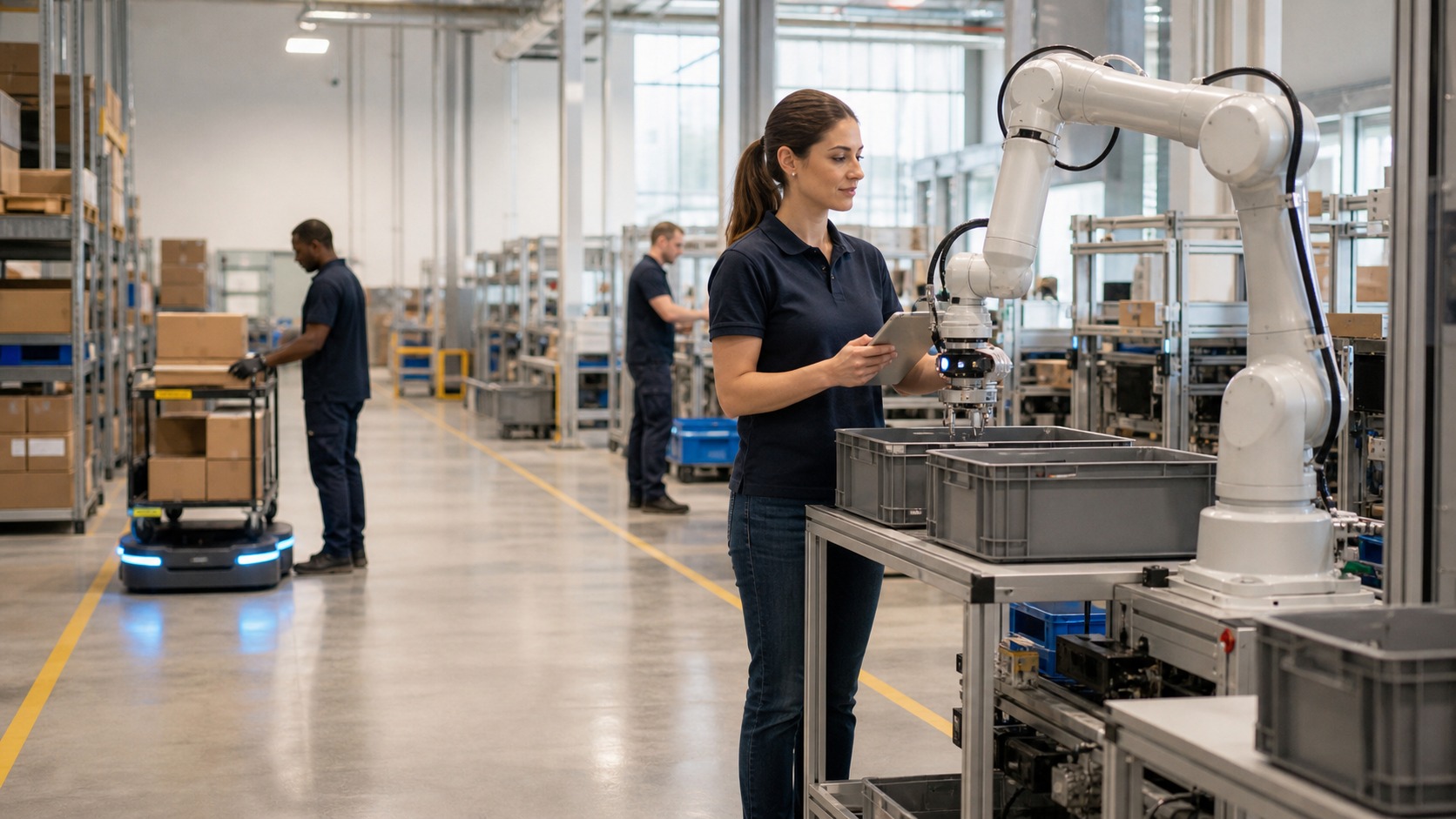
Traditional industrial robots were often separated from people because they moved with speed and force. That protected workers, but it also limited where automation could fit. Collaborative robots, mobile robots, and safer sensing systems have opened more possibilities for shared spaces. A robot might hold a part while a person performs a skilled task, carry material between stations, or slow down when someone enters a defined zone.
Shared work does not mean casual work. Safety has to be designed into the cell, validated against real movement, and understood by operators. AI can help a robot perceive people, obstacles, and changing conditions, but safety cannot rely on perception alone. Manufacturers still need physical safeguards, speed limits, emergency stops, risk assessments, and training that explains what the robot will do in unusual cases.
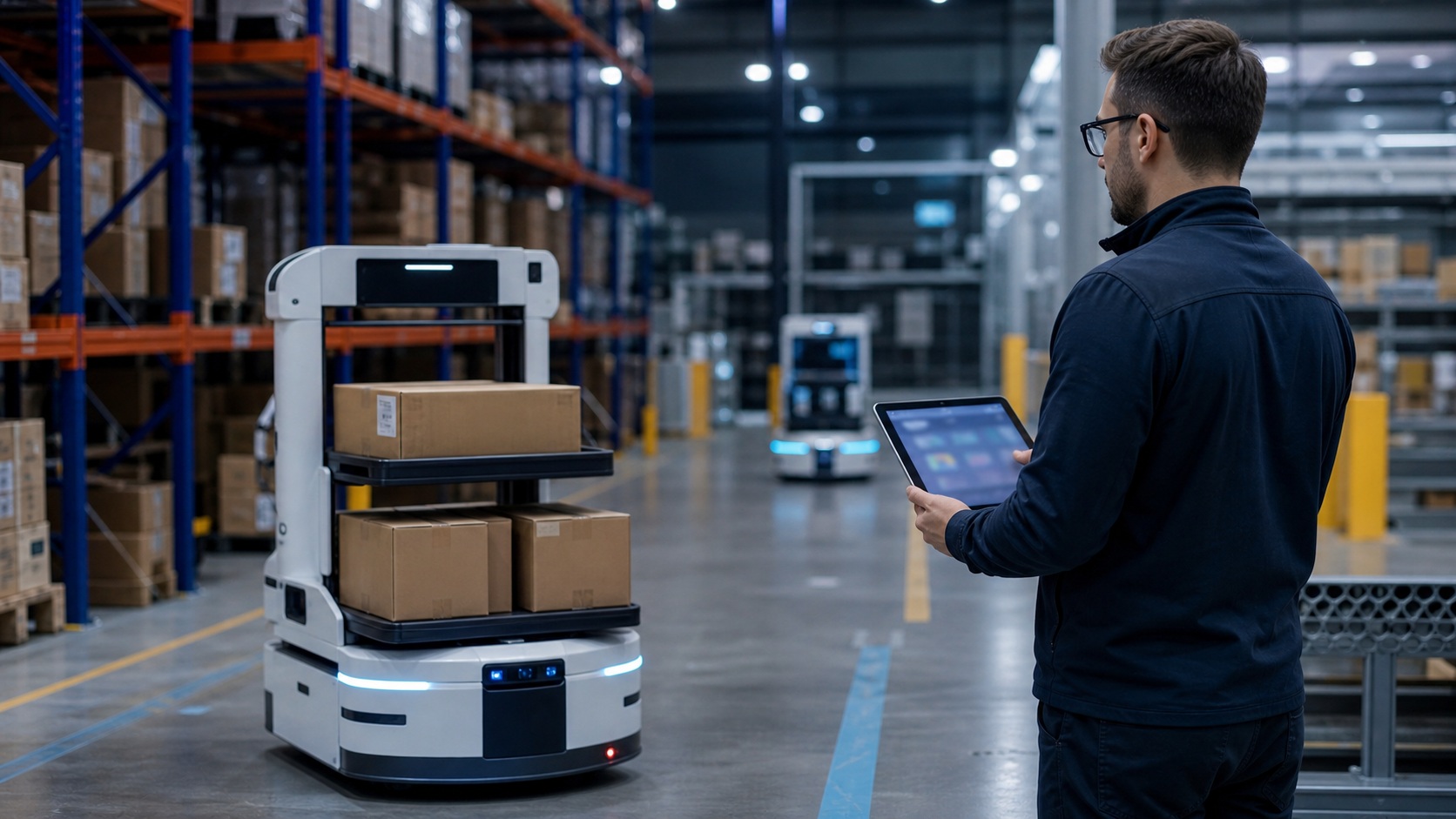
Mobile robots add another layer of change because they affect material flow rather than one isolated motion. A plant can use autonomous carts or tuggers to bring components to lines, remove finished goods, or support kitting areas. The value is not only fewer walking miles. It is steadier flow. When material movement becomes more predictable, operators spend less time searching, supervisors get clearer bottleneck signals, and production planning becomes less dependent on informal workarounds.
Better Robots Change Factory Planning
Once robots become more adaptive, planning changes. Instead of treating automation as a fixed island, manufacturers can ask how machines, people, and production schedules should coordinate. Mobile robots can deliver parts based on actual line demand. Inspection systems can route questionable items to a review station. Predictive maintenance tools can suggest service before a failure stops production. Those connections make the factory more responsive, but they also create new dependencies.
A connected robot cell can fail in quiet ways if teams do not manage versions and handoffs. A camera setting changes, a model update shifts the threshold, a supplier changes material finish, or a dashboard alert goes to the wrong person. Good manufacturing AI needs boring discipline: naming owners, logging changes, testing updates, and documenting what the system is allowed to decide. Without that discipline, flexible automation becomes difficult to trust.
The best planning also includes workers early. Operators know which jams happen every shift, which defects are hard to explain, and which tools are awkward to maintain. Their knowledge helps teams choose robotic projects that solve real problems instead of impressive but fragile demonstrations.
Planning also has to account for the maintenance life of AI systems. A robot cell that depends on cameras and models will need calibration, retraining, cleaning, software updates, spare parts, and people who know how to diagnose both mechanical and data problems. Treating the launch as the finish line is one of the fastest ways to lose value. The more realistic plan asks who will own the cell six months later and how they will know whether performance is drifting.
The Skills Factory Teams Need
AI robotics creates demand for hybrid skills. Plants still need mechanical, electrical, maintenance, and process expertise, but they also need people who can understand data quality, model drift, sensor calibration, and human-machine interfaces. The most useful team members may not be pure AI specialists. They may be technicians, engineers, and supervisors who can translate between production reality and automation design.
Training should include more than button sequences. Operators need to know what the robot is trying to sense, what common failures look like, and which interventions create useful feedback for engineers. Maintenance teams need to know when a symptom points to a worn part, a dirty lens, a network issue, or a model confidence problem. Supervisors need to know how to compare the robot’s local performance with the performance of the whole line.
This is why the best manufacturing AI programs often grow from cross-functional teams. Production understands urgency, quality understands variation, safety understands risk, maintenance understands uptime, and automation engineers understand the cell. When those perspectives meet early, the robot is more likely to solve a real constraint instead of becoming a sophisticated machine attached to a weak workflow.
What To Measure Before Expanding
A robot project should prove itself with measures that matter on the floor. Output per hour is one measure, but it is not enough. Teams should track defect rates, rework, downtime, operator interventions, near misses, maintenance calls, training time, and whether downstream stations improve or suffer. A robot that speeds one step while creating review work elsewhere has not necessarily improved the line.
Expansion should happen when the first cell becomes understandable. Leaders should know why it works, when it fails, who supports it, and what conditions must be present before copying it. That knowledge is more valuable than a glossy success story because it prevents the second deployment from repeating hidden mistakes.
Leaders should also measure worker experience. If a robot removes heavy lifting but creates constant alarms, the project is only partly successful. If it reduces repetitive strain and gives operators clearer information, adoption becomes much easier. Manufacturing transformation is not just a machine-performance story. It is a question of whether the entire work system becomes safer, calmer, more reliable, and easier to improve.
Cost should be measured carefully too. The purchase price of the robot is only the visible part. Plants also pay for integration, tooling, safety validation, operator training, spare parts, support contracts, downtime during changeover, and engineering attention when the product mix changes. A realistic return-on-investment review includes those costs alongside reduced scrap, lower injury risk, steadier quality, and improved capacity. When leaders measure the whole system, they can see whether the robot is creating durable operational value or only moving cost into a different department.
What Comes Next
The next phase of AI-powered manufacturing robots will be less about replacing every worker and more about making factories easier to adjust. More products will be customized, supply chains will keep changing, and plants will need automation that can learn new variations without starting from zero. Robots that inspect, move, assist, and adapt will become part of that response.
The winners will be manufacturers that treat AI as production infrastructure rather than magic. They will connect models to measurable work, keep people in the improvement loop, and build robot cells that can be maintained after the launch team leaves. In that kind of factory, AI-powered robots do not just perform motions. They help the whole operation notice, decide, and improve faster.
Manufacturers should expect this progress to arrive unevenly. Some lines will justify advanced robotic AI quickly because labor strain, inspection cost, or product variation is already painful. Others will be better served by simpler automation, better data collection, or process cleanup first. The practical question is not whether AI-powered robots are impressive. It is where they remove a constraint that the plant can clearly name, measure, and support after installation.
The near-term future will probably look incremental from inside the plant: one better inspection cell, one safer lift assist, one more reliable material route, one maintenance warning that arrives early enough to matter.
Those increments add up. A factory becomes smarter when many small decisions are supported by better sensing and feedback. AI-powered robots transform manufacturing less like a dramatic switch and more like a new operating habit: observe the work, learn from variation, and improve the physical process with people still close enough to steer it.