Quantum AI Is Powerful Because The Problems Are Hard
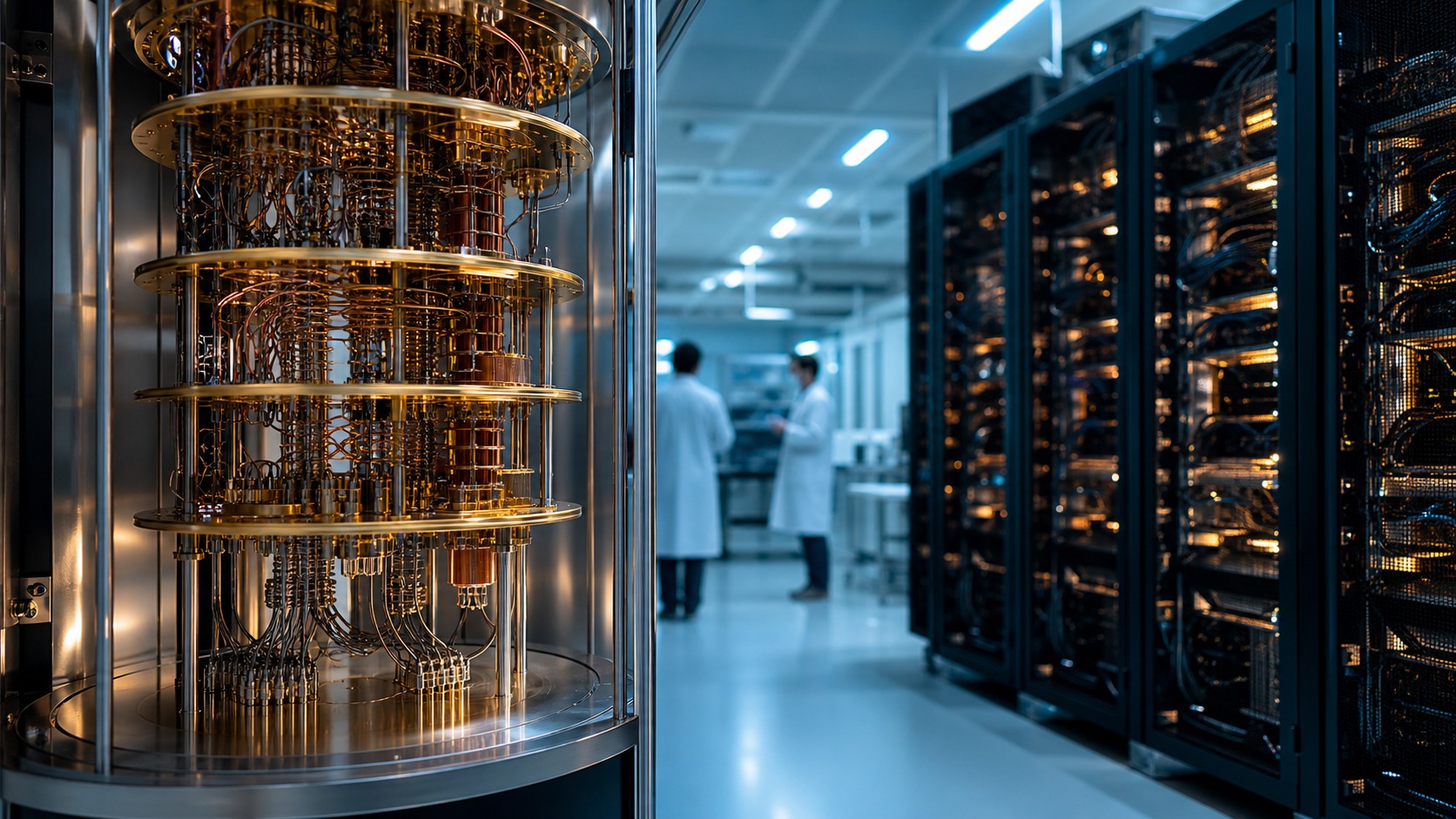
Quantum AI could change everything in the next decade, but not because it will make every chatbot smarter or replace ordinary computers overnight. Its potential comes from a smaller, more serious idea: some of the hardest problems in science, logistics, materials, chemistry, finance, and optimization may fit quantum computing in ways classical machines struggle to match. If quantum hardware improves and hybrid algorithms mature, AI systems may gain new tools for simulating molecules, searching complex solution spaces, sampling difficult probability distributions, and improving decisions where tiny advantages matter.
A: It is about using AI to improve pattern learning, classification, generation, optimization, and prediction while keeping review and context in place.
A: No. Outputs need testing, source checks, and human judgment.
A: Common risks include overfitting, weak evaluation, hidden bias, and brittle generalization.
A: The most important data is the data that matches the real task and user decision.
A: No. Prompts help, but data quality, tool design, and review matter too.
A: Humans should stay involved when outcomes affect people, money, safety, privacy, or trust.
A: Test outputs against real examples, track errors, and measure whether the workflow improves.
A: Yes. Fluency is not proof of accuracy.
A: Clear goals, good data, review points, monitoring, and a fallback plan.
A: Accountability stays with builders who test limits instead of trusting demos.
The Next Decade Is About Specific Breakthroughs
Quantum AI sounds enormous because both words carry a lot of expectation. The realistic opportunity is more specific. Quantum computers may eventually handle certain mathematical structures better than classical machines, and AI workflows may use those strengths for hard subproblems. That does not mean every model becomes quantum. It means some scientific, industrial, and optimization problems may get new tools.
The next decade will likely be measured by specific breakthroughs rather than general transformation. A better molecular simulation, a stronger optimization routine, a useful sampling method, or a quantum-inspired algorithm that improves classical AI may matter more than a consumer product with quantum branding. The field will mature when claims become narrower and evidence becomes stronger.
This is a healthier way to understand the phrase change everything. A technology can change important parts of science and industry without replacing every computer on every desk. Quantum AI could change everything for drug discovery, materials design, or logistics planning before most consumers ever notice.
The decade may also change how researchers think about AI infrastructure. Today, most AI scale conversations revolve around GPUs, data centers, and model size. Quantum AI adds a different question: can a specialized physical machine expand what certain AI workflows can explore? Even if the answer is yes only for a few domains, those domains may be important enough to reshape investment and research priorities.
Why Optimization Is Such A Big Target
Many industries face optimization problems with enormous numbers of possible choices. A logistics company balances routes, drivers, fuel, delivery windows, weather, and warehouse capacity. An energy company balances generation, storage, demand, and grid constraints. A manufacturer balances production schedules, supplier timing, machine availability, and quality goals. Even small improvements can be valuable.
Quantum approaches are interesting because some optimization problems can be expressed in forms that quantum routines may explore differently. Quantum annealing and variational methods do not magically solve every scheduling problem, but they give researchers another search strategy. The value depends on whether that strategy beats the best classical approach after overhead is counted.
This is why benchmarks matter. A quantum method should be compared against strong classical solvers, not weak baselines. Classical optimization is a moving target because researchers keep improving algorithms and hardware. Quantum AI will earn trust only when it proves advantage on specific, practical workloads.
Science May Be The Earliest High-Impact Domain
Chemistry and materials science are natural candidates because the physical systems being studied are quantum systems themselves. Classical computers can simulate many useful cases, but complexity grows painfully for certain molecules and materials. If quantum computers can model these systems more directly, they could help researchers discover better batteries, catalysts, medicines, fertilizers, superconductors, or carbon-capture materials.
AI already supports scientific discovery by searching chemical spaces, predicting properties, and guiding experiments. Quantum routines could become part of that discovery loop. A classical AI system might propose candidate molecules, a quantum simulation might evaluate selected properties, and laboratory results might feed the next round. This hybrid pattern is more realistic than imagining a standalone quantum AI scientist.
The payoff could be enormous because scientific improvements ripple outward. Better battery materials affect transportation and energy storage. Better catalysts affect manufacturing and climate technology. Better drug candidates affect healthcare. Quantum AI does not need to improve every industry directly if it improves the scientific foundations many industries depend on.
This scientific path also fits the realities of early quantum hardware. Research teams are often prepared to work with specialized systems, uncertain results, and long validation cycles. They can compare simulations with laboratory experiments and refine methods over time. That makes science a more plausible early home than consumer software, where users expect immediate reliability and broad usefulness.
Hybrid Systems Are The Practical Path
Near-term quantum AI will almost certainly be hybrid. Classical computers will prepare data, manage workflows, run most AI models, optimize parameters, and interpret results. Quantum processors will be called for narrow routines where their structure may help. This is similar to how specialized accelerators already support modern computing without replacing the entire system.
Hybrid design is practical because current quantum hardware is limited and noisy. It also reflects the reality that most business and scientific data begins in classical form. The challenge is deciding which part of the workflow is worth sending to a quantum routine. If data preparation costs more than the quantum step saves, the advantage disappears.
Good hybrid systems will hide complexity from users. A chemist, planner, or engineer may not care whether a subroutine was quantum or classical. They will care whether the result is better, faster, cheaper, or more accurate. Quantum AI will become useful when it improves outcomes without requiring every user to become a quantum physicist.
The Limits Are Serious
Quantum AI faces real barriers. Hardware noise can corrupt results. Error correction requires many physical qubits to protect fewer reliable logical qubits. Devices are expensive and specialized. Algorithms are difficult to design. Data loading can be a bottleneck. Talent is scarce. These constraints are not small details; they define what is possible in the next decade.
Hype can obscure those limits. It is easy to say quantum AI will transform everything, but harder to show which workload improves, by how much, under what assumptions, and at what cost. Serious teams will ask for full workflow comparisons. They will include classical baselines, overhead, error rates, and reproducibility.
What Businesses Should Do Now
Most organizations should not rebuild their AI strategy around quantum computing today. They should identify whether they have problem types that might eventually benefit: optimization, simulation, complex sampling, materials, chemistry, energy, finance, or logistics. If they do, they can monitor research, run small experiments, and build relationships with credible partners.
They should also strengthen their classical foundations. Clean data, reproducible experiments, strong baselines, model governance, and domain expertise will remain necessary whether quantum methods arrive soon or later. A company that cannot evaluate classical AI honestly will not evaluate quantum AI well.
The smartest posture is disciplined curiosity. Avoid dismissing the field because it is early, but also avoid spending heavily on vague promises. Ask what problem is being solved, why quantum structure helps, what classical method it beat, and whether the advantage survives real-world overhead.
Businesses should also watch talent and partnership signals. A credible quantum AI effort usually includes domain experts, classical machine learning specialists, quantum algorithm researchers, and people who understand evaluation. If a project lacks one of those groups, it may struggle to connect theory with value. The future will belong to teams that can translate between physics, software, and the actual problem being solved.
A Decade Roadmap Should Start With Portfolios
Organizations should think about quantum AI as a portfolio of options rather than a single bet. One option might track materials simulation. Another might follow route optimization. Another might examine quantum-inspired classical methods that are useful sooner. This portfolio mindset keeps learning active without forcing the company to pretend every experiment must become production software immediately.
A good roadmap also defines exit criteria. If a proof of concept cannot beat a classical baseline, if hardware access is too costly, or if the business problem cannot be translated clearly, the team should say so. Honest negative results are valuable because they prevent quantum curiosity from becoming unfocused spending. The next decade will reward disciplined experiments, not slogans.
The Strategic Impact May Arrive Through Supply Chains
Quantum AI may first affect many companies indirectly. A battery supplier may discover a better material. A pharmaceutical partner may improve candidate screening. A logistics vendor may use a hybrid optimization service. A cloud platform may offer a specialized solver hidden behind an ordinary interface. In those cases, businesses benefit from quantum AI without building a quantum team themselves.
That indirect path is important because it makes the technology less theatrical and more plausible. Most organizations adopt breakthroughs through suppliers, platforms, and services before they understand the underlying machinery. Quantum AI could follow the same path. The first sign of change may be better materials, better planning, or better scientific tools, not a dramatic quantum dashboard.
Executives should therefore watch procurement, patents, vendor roadmaps, research partnerships, and specialist service contracts. The commercial signal may appear when a supplier can deliver a lighter material, a faster formulation cycle, or a more resilient logistics plan because its upstream research used quantum-assisted methods. That kind of impact is easy to miss if leaders only look for a branded quantum product. The next decade may make quantum AI important through quiet competitive advantage rather than public spectacle.
Why The Next Decade Still Matters
The next decade matters because quantum AI does not need universal dominance to become important. It only needs a few meaningful wins in high-value domains. A better molecular model, a better optimization method, or a better simulation pipeline could influence industries far beyond the lab where it begins.
The path will be uneven. Some claims will fade. Some classical methods will catch up. Some quantum-inspired ideas will become useful before quantum hardware is ready. Some breakthroughs will be narrow but valuable. That is normal for frontier technology.
Quantum AI could change everything in the next decade if everything is understood as the set of hard problems that shape medicine, energy, logistics, materials, and scientific discovery. It will not change everything by making all AI instantly quantum. The real future is more precise and more interesting: hybrid systems using the right machine for the right part of the problem.
That precision is what makes the field worth watching. The promise is not that quantum AI will make every existing model obsolete. The promise is that it may open new routes through a handful of problems whose solutions matter widely. If even a few of those routes become practical, the next decade could look very different for industries built on discovery, optimization, and complex physical systems.
For leaders, the useful question is not whether quantum AI sounds revolutionary. It is whether a specific research program, vendor partnership, patent portfolio, or platform service can create an advantage that competitors cannot easily copy. That turns the topic from a science-fiction debate into a strategic planning issue. Companies may need scouting teams, board-level education, procurement criteria, and small technical experiments long before they need a production quantum deployment.
This is where the next decade could be decisive. The organizations that learn early will understand the vocabulary, the suppliers, the constraints, and the credible use cases before the market becomes crowded. They will also know when not to use quantum methods. That judgment may be as valuable as the first successful workload, because frontier technology rewards disciplined timing as much as enthusiasm.
The competitive story may therefore look like capability scouting rather than wholesale replacement. Legal teams may track intellectual property around quantum-assisted discovery. Strategy teams may map which suppliers have credible laboratory partnerships. Finance teams may decide whether a pilot belongs in research, innovation, procurement, or product development budgets. Operations leaders may ask whether a solver changes a contract, a delivery promise, or a design cycle. These are business questions, and they make this article’s decade-focused argument different from a technical comparison of quantum and classical AI.
A practical readiness plan might include a supplier watchlist, a glossary for executives, a shortlist of candidate business problems, and a review calendar for deciding whether evidence has improved. It might also include a rule that no project advances without a baseline, a cost estimate, and an owner who can explain the operational payoff. That kind of planning sounds less dramatic than predicting a computing revolution, but it is how organizations prepare for technology that may arrive unevenly. Quantum AI could change the next decade most for companies that learn how to recognize useful progress before it becomes obvious to everyone else.
Boards may treat this as horizon planning rather than infrastructure migration. Useful preparation could involve scenario memos, acquisition scouting, university alliances, grant monitoring, standards participation, supplier questionnaires, patent landscaping, and contract language for specialized services. Those activities use the vocabulary of strategy, governance, procurement, and competitive intelligence more than the vocabulary of physics. That is exactly the point: the decade-changing impact may begin with organizational preparedness before it appears as a finished technical platform.