Autonomous Systems Turn AI Into Action
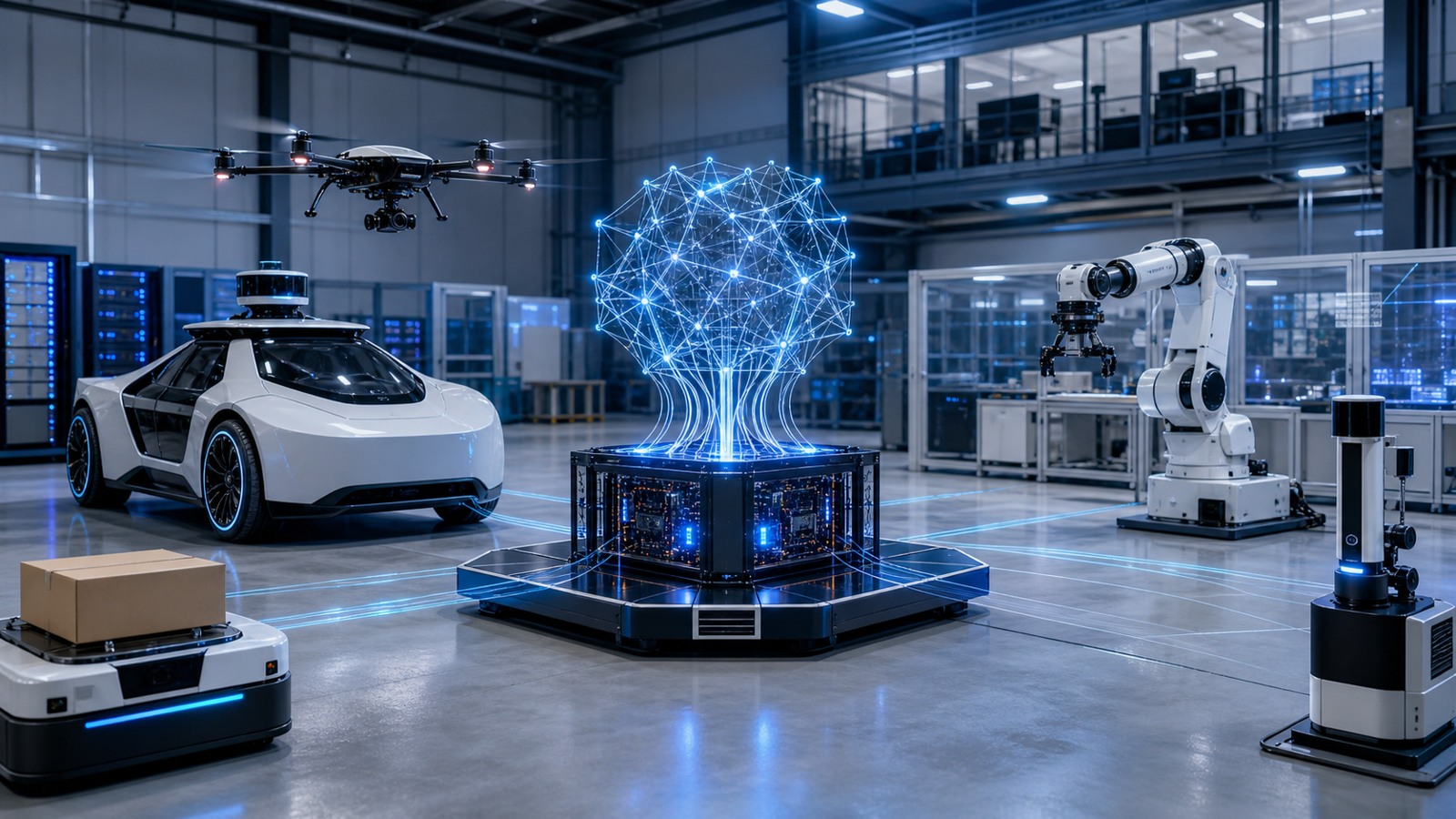
Autonomous systems are machines or software environments that can sense conditions, make decisions, and act with limited human direction. They include self-driving features, warehouse robots, drones, smart factories, agricultural machines, autonomous ships, energy systems, and digital agents that operate across software. What makes them important is that AI is no longer only analyzing information after the fact. It is increasingly connected to movement, timing, control, and real-world consequences. Understanding autonomous systems means understanding how perception, planning, safety, and human oversight work together.
A: It can sense conditions, choose an action within limits, and respond without waiting for every instruction.
A: Automation follows predefined steps; autonomy adapts within boundaries when the environment changes.
A: It appears in robots, vehicles, drones, factories, logistics, energy systems, and software agents.
A: The system cannot act safely unless it understands the situation well enough.
A: It is a safer behavior used when the system is uncertain, faulty, or outside its limits.
A: Yes. People define goals, risk limits, oversight rules, maintenance, and accountability.
A: The hard part is handling messy edge cases while keeping accountability, safety limits, and recovery paths clear.
A: Some can, but updates need testing, monitoring, and governance.
A: No. Software agents can also operate autonomously across digital workflows.
A: Autonomy is safest when AI capability is paired with boundaries, testing, and oversight.
What Makes a System Autonomous
A system becomes autonomous when it can handle some decisions without step-by-step human instruction. That does not mean it is free to do anything. It means people have defined a goal, given the system information about its environment, and allowed it to choose actions within boundaries.
Those boundaries are what make autonomy practical. A warehouse robot may choose a route, but only inside mapped areas and speed limits. A software agent may update records, but only after authentication and policy checks. A drone may inspect a tower, but not fly outside an approved zone. The system's freedom is useful because it is shaped by constraints.
Autonomy exists on a spectrum. A thermostat has simple automated behavior. A warehouse robot has more autonomy because it senses obstacles and chooses routes. A self-driving vehicle has far more complex autonomy because it must interpret roads, people, weather, laws, and unpredictable movement. The level of autonomy depends on the task and the risk.
The important idea is that autonomy combines perception, decision-making, and action. AI may help with each layer, but the complete system includes sensors, software, controls, interfaces, policies, and human operators. A model alone is not an autonomous system.
This is why autonomous systems are harder to deploy than ordinary AI tools. A bad summary can be corrected after reading. A bad steering decision, robotic motion, or grid-control action may create immediate consequences. The closer AI gets to action, the more important verification, fallback behavior, and operational discipline become.
Sensing Turns the World Into Data
Autonomous systems begin with sensing. Cameras, radar, lidar, microphones, GPS, temperature sensors, pressure sensors, logs, and software events can all describe what is happening. The system needs enough information to make a decision that fits the moment.
Sensing is difficult because the real world is messy. Light changes. Roads get wet. Warehouses are rearranged. Dust blocks a camera. Network data arrives late. People behave unexpectedly. A system that works in a clean demo may struggle when the environment becomes noisy.
Good systems therefore combine multiple signals where possible. A vehicle may use cameras, radar, maps, and motion sensors. A factory robot may combine vision with force feedback. A software agent may compare logs, permissions, and user history. Redundancy does not remove uncertainty, but it gives the system more ways to notice when something does not add up.
AI Helps Interpret and Predict
After sensing comes interpretation. The system must decide what the data means. Is that shape a pedestrian, a shadow, a box, or a sign? Is that vibration normal machine behavior or early failure? Is that software action routine or suspicious? AI models are useful because they can find patterns in complex inputs.
Prediction is the next layer. An autonomous vehicle needs to estimate where nearby cars and people may move. A factory system needs to predict whether a machine is drifting toward failure. A delivery robot needs to know whether a hallway will stay clear long enough to pass. Good prediction makes action safer.
But prediction is never perfect. That is why autonomous systems need uncertainty handling. When the model is unsure, the system should slow down, ask for help, choose a safer option, or stop. A confident wrong action is more dangerous than a cautious pause.
Prediction also has to match the time scale of the task. A drone avoiding a branch needs fast local judgment. A factory scheduler can take longer to compare options. A smart grid may need to anticipate demand hours ahead. Autonomous design improves when teams match the model, latency, and decision window to the actual problem.
Planning Connects Goals to Actions
Planning is where an autonomous system chooses what to do. It may compare routes, schedules, speeds, tool movements, energy use, or software actions. A good plan balances the main goal with constraints such as safety, cost, time, power, comfort, and legal requirements.
Planning also needs to be flexible. If a robot's path is blocked, it should not simply fail. It can reroute, wait, ask for human help, or switch to a different task. If a drone encounters wind, it may change altitude or return home. Autonomy becomes useful when systems adapt without losing sight of boundaries.
The hardest planning problems involve other agents. People, vehicles, machines, and software users do not always behave predictably. Autonomous systems need to plan in ways that are robust to surprise. That often means choosing actions that leave room for correction.
Planning also includes deciding when not to act. A system that always tries to complete the mission can become unsafe when conditions shift. The best autonomous machines treat stopping, waiting, or escalating as valid actions. That conservative behavior may look less impressive in demos, but it is often what makes deployment possible.
Planners also need priorities when goals conflict. A delivery robot may need to choose between speed and pedestrian comfort. A factory system may need to choose between throughput and equipment wear. A software agent may need to choose between completing a task and protecting sensitive data. Those priorities must come from human policy, not from whatever the model happens to optimize.
Control Turns Decisions Into Motion
A decision is only useful if the system can execute it. Control systems turn plans into motor commands, steering, braking, robotic arm movement, valve changes, network actions, or software operations. This layer must be precise because small control errors can become large real-world problems.
Control also creates feedback. The system checks whether the action produced the expected result. If a wheel slips, the vehicle adjusts. If a robotic arm misses alignment, it corrects. If a software agent cannot access a file, it tries an approved alternative or escalates. Feedback is what keeps autonomy connected to reality.
This feedback loop is also where maintenance shows up. Motors wear down, sensors drift, parts loosen, software dependencies change, and environments evolve. An autonomous system that was safe last month may need recalibration today. Teams need monitoring that can distinguish a one-time anomaly from a sign that the system's assumptions are aging.
Human Oversight Defines the Boundary
Autonomous systems still need people. Humans decide what the system is for, where it may operate, what risks are acceptable, and what happens when it reaches uncertainty. Oversight is not a weakness in autonomy. It is part of responsible design.
Good oversight requires clear interfaces. Operators need to know what the system is doing, why it is doing it, and whether it needs help. A dashboard that only says everything is fine until something fails is not enough. The system should show confidence, status, alerts, and recommended interventions.
The human role varies by risk. A cleaning robot may need occasional monitoring. A surgical robot, autonomous truck, or energy grid controller needs stronger boundaries and review. The goal is not maximum autonomy everywhere. The goal is the right level of autonomy for the job.
Oversight also has to be realistic. If one operator is expected to monitor too many systems at once, they may miss the moment when intervention matters. If alerts are constant, people learn to ignore them. Human-centered autonomy designs for attention, training, and workload, not just technical capability.
Where Autonomous Systems Are Growing
Logistics is one of the fastest-growing areas. Robots can move goods through warehouses, route packages, inspect inventory, and support delivery networks. AI helps these systems adapt to changing layouts, demand spikes, and traffic patterns. Even modest improvements can matter when operations run at large scale.
Agriculture is another strong use case. Autonomous equipment can monitor crops, apply inputs more precisely, detect disease, or harvest under specific conditions. The value comes from combining sensors, location data, weather, and machine control. Farmers still make the strategic decisions, but autonomy can reduce waste and labor strain.
Energy, manufacturing, healthcare logistics, mining, construction, and public infrastructure are also adopting more autonomy. In each field, the best systems are shaped by domain knowledge. AI may provide perception and prediction, but local expertise defines what safe and useful action looks like.
Digital autonomy is growing too. Software agents can gather information, fill forms, update tickets, draft reports, or coordinate workflows. These systems may not move through physical space, but they still act in environments with rules and consequences. They need permissions, audit logs, and escalation boundaries for the same reason robots need safety limits. A digital agent that sends the wrong message, changes the wrong record, or exposes the wrong file can create real operational harm, especially when it works faster than people can easily review and reverse.
Public infrastructure may become one of the most important arenas. Traffic signals, water systems, transit networks, and emergency response tools all involve complex timing and local tradeoffs. Autonomous support can help, but mistakes affect communities. That makes transparency, public oversight, and resilience essential parts of deployment.
The Risks Are Practical, Not Science Fiction
The biggest risks in autonomous systems are often practical. Sensors fail. Models misread unusual situations. Operators overtrust the machine. Software updates introduce unexpected behavior. Attackers manipulate connected systems. A process designed for one environment gets deployed in another without enough testing.
These risks can be managed, but they cannot be wished away. Teams need simulation, controlled pilots, incident reporting, cybersecurity, maintenance, and clear stop conditions. They also need humility about edge cases. Real-world autonomy is hard because reality keeps producing situations that were not in the training set.
The practical nature of these risks is good news in one sense. It means teams can improve them through engineering discipline rather than waiting for a distant breakthrough. Better test coverage, clearer operating domains, stronger sensor checks, and more honest user training can reduce failures. Autonomy becomes safer when treated as infrastructure, not magic.
The Next Generation of Intelligent Machines
The next generation of autonomous systems will be more connected, more collaborative, and more capable of learning from diverse data. Vehicles may coordinate with infrastructure. Robots may work more safely beside people. Software agents may handle routine operations while escalating ambiguous cases.
Progress will depend less on a single breakthrough and more on integration. Better sensors, stronger models, safer control systems, clearer regulation, and better human interfaces all matter. A machine becomes intelligent in practice when those pieces work together under real conditions.
For beginners, the key is to see autonomy as action under constraints. AI gives machines more ability to interpret and decide, but responsible design gives them boundaries. The future belongs to systems that are capable enough to help and disciplined enough to be trusted.
That trust will be earned slowly. People will accept autonomous systems when they see consistent performance, understandable behavior, and graceful failure. The next generation of intelligent machines will not be judged only by what they can do when everything works. They will be judged by how they behave when the world becomes uncertain and the easy answer disappears under pressure in real deployments, around real people daily.