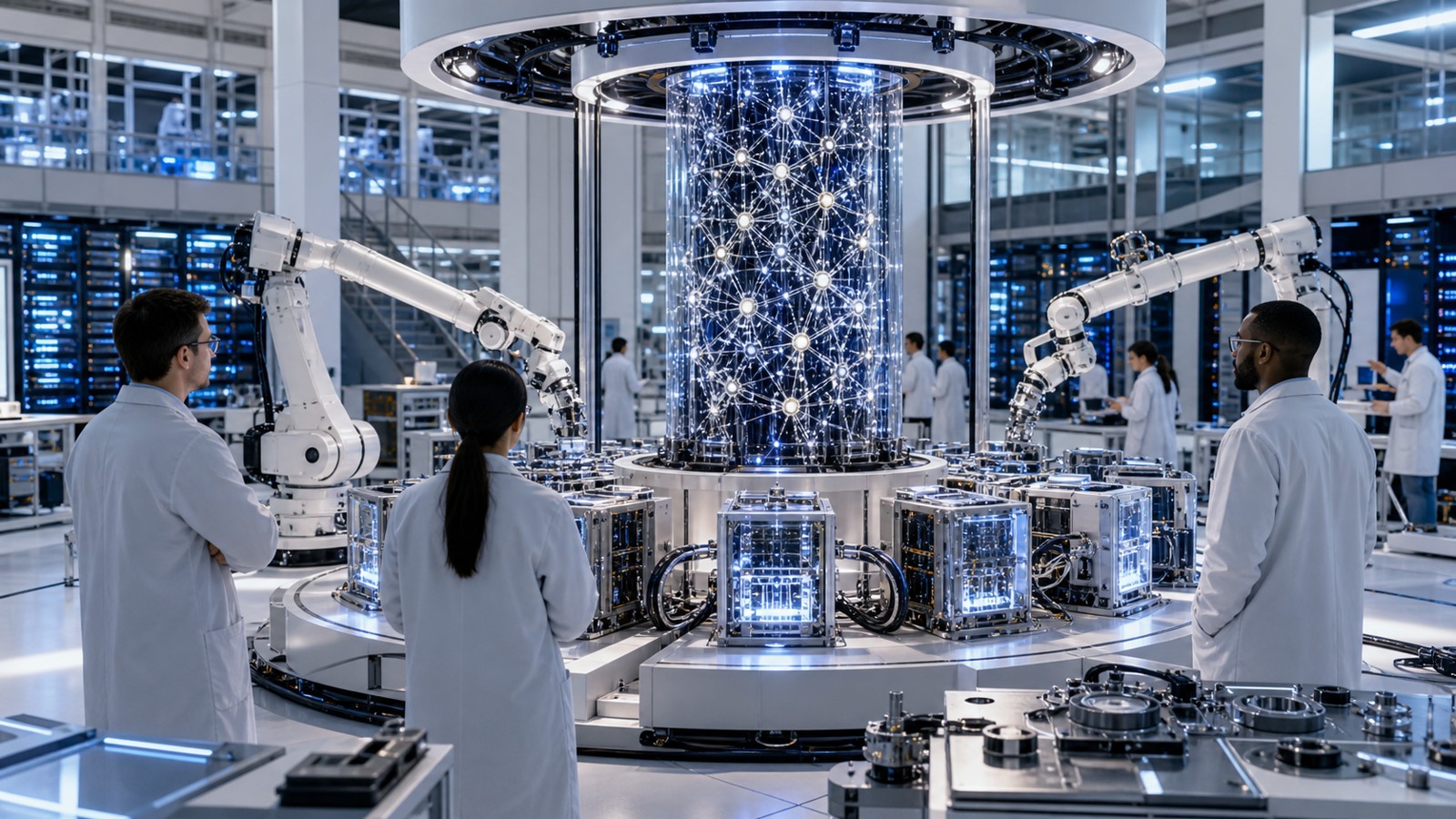
AI Forecasting Looks for Early Signals in Noisy Change
AI predicts market trends, consumer behavior, and global events by finding patterns that are too wide, fast, or subtle for people to track unaided. The best systems do not magically know the future. They combine historical data, live signals, statistical modeling, machine learning, and human interpretation to estimate what is becoming more or less likely. That makes AI useful for demand planning, risk monitoring, pricing, logistics, public health, finance, and media strategy. It also makes caution essential, because a forecast is a decision aid, not a guarantee.
A: It can estimate probabilities from patterns, but it cannot remove uncertainty or surprise.
A: Markets react to expectations, incentives, emotion, and shocks that may not appear in prior data.
A: No. Responsible teams use prediction to serve demand and reduce friction, not exploit vulnerability.
A: They combine human decisions, institutional constraints, environment, and incomplete information.
A: Only when the data is relevant, timely, clean, and connected to the decision being made.
A: High-impact forecasts should guide people, with review paths and clear accountability.
A: Teams use ranges, confidence intervals, scenarios, and likelihood bands.
A: It is the moment when old relationships in data stop describing current behavior.
A: Yes, especially for inventory, staffing, marketing timing, and cash-flow planning.
A: Treat AI prediction as a disciplined warning system, not an oracle.
Why AI Prediction Feels Different Now
Prediction has always been part of business and public planning, but AI changes the scale. A retail analyst may compare last summer's sales with this summer's weather. A machine learning system can compare that same relationship across stores, regions, holidays, promotions, social chatter, competitor pricing, shipping delays, and economic signals. The advantage is not that the system has mystical foresight. It can simply hold more moving pieces in view at once.
That matters because many trends no longer begin in obvious places. A product shortage might start as a factory delay, show up as a shipping backlog, appear next in wholesale prices, and only later become visible to consumers. A cultural trend might appear first in creator communities, then in search behavior, then in purchases. AI forecasting tries to connect those early tremors before they become plain to everyone.
The same strength creates risk. If the model sees a pattern that is real but temporary, leaders may overreact. If it sees a pattern that is historically common but ethically sensitive, it may produce predictions that treat groups unfairly. Good AI forecasting therefore requires a careful loop: collect useful signals, test them, explain the uncertainty, act modestly, and keep measuring what happened afterward.
The best teams keep that loop visible. They document which signals were used, which assumptions changed, and which decisions followed from the forecast.
How Forecasting Models Learn Patterns
Most AI forecasting starts with examples of the past. The model is shown inputs that existed before an outcome and then learns which combinations tended to precede that outcome. In market prediction, the outcome might be price movement, demand growth, churn, sales volume, or delivery risk. In consumer prediction, it might be purchase timing, product preference, support need, or likelihood to cancel.
The model does not understand those outcomes the way a person does. It learns relationships in the data. Some relationships are stable and useful, such as seasonal demand for school supplies. Others are fragile, such as a social trend that disappears when a platform changes its algorithm. That is why forecasting teams test models against time periods the model did not train on, including stressful periods where possible.
Modern systems often combine several model types. Time-series models track patterns across dates. Classification models estimate whether a defined event is likely. Language models extract signals from unstructured text such as news, transcripts, reviews, and support conversations. The strongest systems usually pair machine speed with human domain judgment.
A useful forecast also has a time horizon. Predicting next week's restaurant demand is different from predicting next year's category growth. Short horizons often have clearer signals and smaller uncertainty. Longer horizons may be more strategically valuable, but they require wider ranges and more humility.
Teams also have to decide how fresh the signal must be. A quarterly planning model can tolerate slower updates, while a fraud or logistics model may need to react within minutes. Fresh data is not automatically better if it arrives without cleaning, context, or quality checks. The useful question is whether the update improves the decision before the decision window closes.
Markets React to Predictions Themselves
Financial and business markets are especially difficult because participants respond to what they think others will do. If many traders believe a stock will rise, their buying may help push it up temporarily. If many companies expect a supply shortage, their efforts to secure inventory can make the shortage worse. Forecasts do not merely describe markets; they can become part of the market environment.
AI can still help by organizing signals and estimating risk. It can notice earnings language that resembles past downturns, detect unusual volatility, identify pricing pressure, or compare a company's hiring patterns with its stated strategy. But market forecasts should rarely be treated as stand-alone instructions. They are one layer in a larger decision process that includes valuation, incentives, regulation, macroeconomic context, and human behavior.
For business operators, the most practical market forecasts are often less dramatic than stock calls. A company may use AI to predict demand for a product line, estimate procurement pressure, or decide where to add customer support. These forecasts are closer to operations than speculation, which makes them easier to measure and improve.
Consumer Behavior Is Personal and Contextual
Consumer forecasting is powerful because behavior leaves many signals. People search, browse, compare, ask questions, abandon carts, write reviews, contact support, renew subscriptions, and respond to promotions. AI can study those signals to estimate what customers may need next. Used well, this can reduce waste, improve service, and help companies offer the right product at the right time.
The ethical line is important. Predicting that a customer may need replacement parts is different from exploiting a moment of stress. Predicting churn is useful when it leads to better support, clearer pricing, or a better product. It becomes manipulative when the system is used to pressure people, hide better offers, or personalize unfair terms. AI Streets readers should watch not only what a model can predict, but what the organization chooses to do with the prediction.
Context also changes meaning. A spike in searches for generators may signal storm preparation in one region, business expansion in another, and general research elsewhere. A support complaint may predict churn for a new customer but loyalty for a long-time customer who expects a fix. Good models use context carefully, and good teams avoid reducing people to scores.
Privacy-aware design is part of the answer. Companies can forecast at the aggregate level, limit sensitive features, minimize retention, and use consent-based data where possible. The goal is to understand demand and risk without turning every human signal into a surveillance asset.
Global Events Require Scenario Thinking
Global event prediction is where AI's promise and limits are easiest to see. Supply disruption, migration, conflict risk, public health pressure, energy demand, crop yields, and cyber threats all involve many interacting systems. AI can monitor signals faster than a human team and surface relationships across sources. That makes it useful for early warning and planning.
But global events are not purely mathematical. Political choices, institutional trust, misinformation, weather, local culture, infrastructure, and chance all shape outcomes. A model can estimate that risk is rising, but it may not know which human decision will change the path. The safest approach is scenario thinking: if this risk grows, what should we prepare; if it fades, what should we unwind; if it shifts location, who needs to know?
AI can help teams avoid being blindsided, but it should not create false certainty. When the stakes are high, forecasts need explanation, competing viewpoints, and human accountability. A system that says 'risk is rising here for these reasons' is more useful than one that delivers a confident but unexplained prediction.
The biggest benefit may be speed. Human analysts can spend less time gathering scattered signals and more time interpreting what the signals mean. That is where AI forecasting becomes a partner in judgment rather than a replacement for it.
Good global forecasting also includes communication design. A warning that is technically correct but too vague, too late, or too hard to act on may not help anyone. The output has to reach the people who can prepare, and it has to say what changed, why it matters, and what evidence would reduce or increase concern.
The Practical Workflow for Better Forecasts
A strong forecasting workflow starts with the decision. Teams should ask what action the forecast will influence, how early they need to know, what a false alarm costs, and what a missed warning costs. Without those answers, the model may optimize a metric that sounds impressive but does not improve the work.
Next comes measurement. The team should compare the AI forecast with simple baselines, such as last year's number, a moving average, or an expert estimate. If the model cannot beat a simple method, it may not be worth the complexity. If it beats the baseline only in calm periods, leaders should know that before a shock arrives.
Finally, the forecast needs a review rhythm. Models should be recalibrated, failures should be studied, and users should be trained to read probabilities. A 70 percent likelihood is not a promise. It means the team should prepare while still asking what evidence could prove the forecast wrong.
What AI Forecasts Should Not Be Asked to Do
AI should not be asked to provide certainty where certainty does not exist. It should not be used to disguise speculation as science. It should not replace accountability in financial, medical, legal, employment, or public safety decisions. It should not be trusted simply because the interface looks polished or the output is written with confidence.
Forecasting tools can also create feedback loops. If a model predicts that a neighborhood is risky and services are reduced there, the reduced services may worsen outcomes, which then appears to confirm the model. Similar loops can happen in credit, hiring, pricing, policing, education, and insurance. Responsible forecasting includes monitoring for these effects.
The healthiest use of AI prediction is often modest. It helps people ask better questions earlier. It points to possible futures, highlights weak signals, and gives teams time to prepare. The future still belongs to events, choices, and consequences.
For readers, the key is to look past the promise of prediction and inspect the practice. What data is used? How is uncertainty shown? Who reviews the forecast? What happens when the model is wrong? Those questions separate useful foresight from expensive guessing.
The Future of Predictive AI
Predictive AI will become more embedded in everyday operations. Retailers will forecast demand by neighborhood, hospitals will anticipate resource pressure, utilities will predict grid strain, farms will plan around weather and soil models, and governments will use early-warning tools for infrastructure and disaster response. The systems will feel less like special software and more like background intelligence in planning tools.
The best future is not one where every decision is automated. It is one where forecasts are timely, transparent, and humble enough to support human responsibility. Better interfaces will show why a prediction changed, which signals mattered, and how confident the system is. Better governance will define when a model may advise and when a person must decide.
AI prediction is ultimately about preparation. It cannot promise what will happen next, but it can help people notice what may be forming. In a noisy world, that extra time can be valuable: not because the model knows fate, but because it helps humans respond before the obvious answer arrives too late.